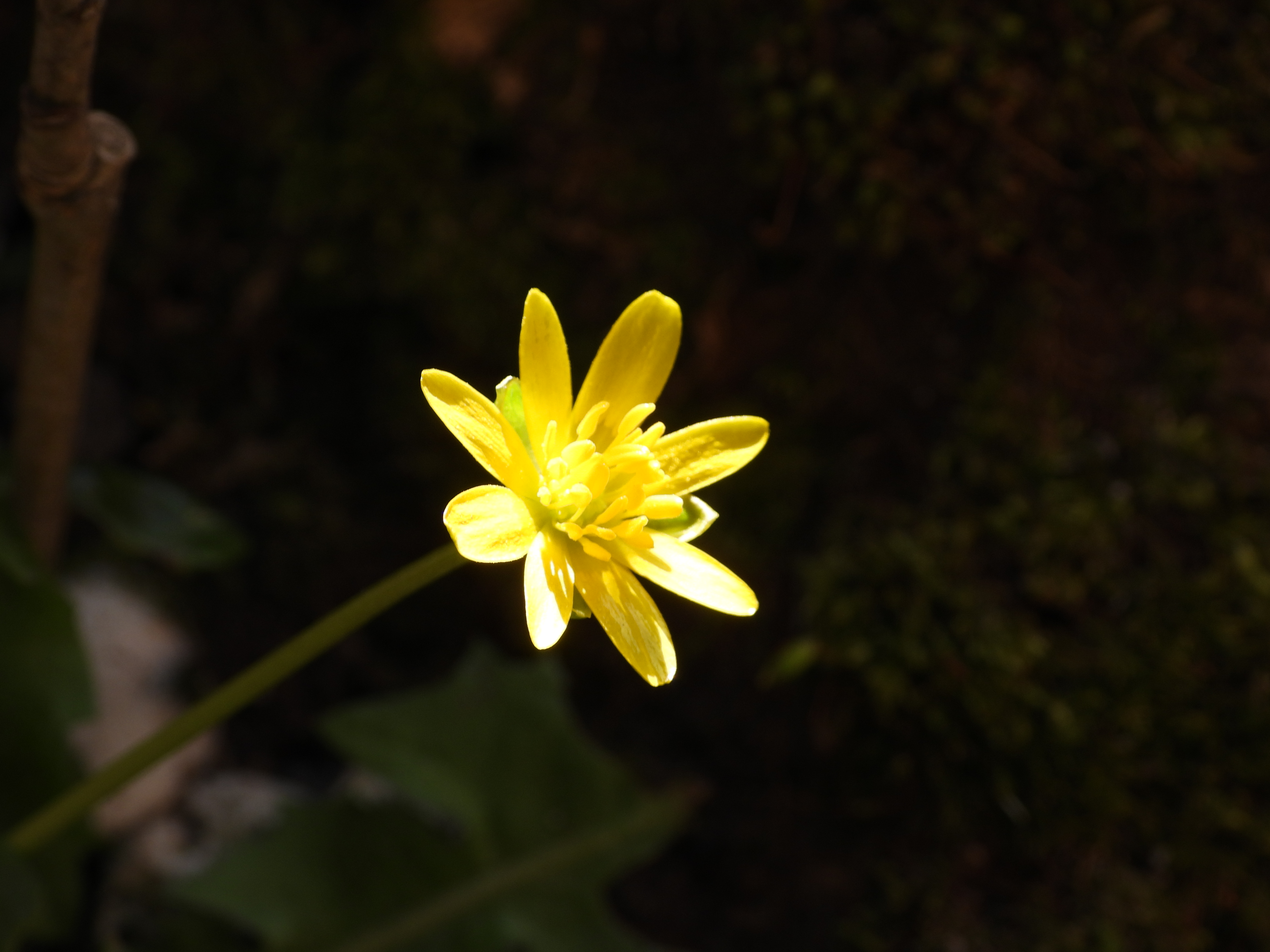
Garden trees, shrubs and flowers
I have spent the morning going down rabbit-holes. Not literally of course. It began with a few photographs of trees and plants in the garden. I had been in a terrible muddle about the former and remembered the lesson never to assume anything, to question everything even when you are told something with supreme confidence by someone else. I am certain (in as much as I am certain about anything) about the linden tree, which appeared out of nowhere one day and grew at an astonishing rate, but no one nor any app was able to identify it for a long time until I looked into this photo of dry leaves and seeds late in the year, see here:
British Wildlife magazine August 2024 – Animal Wild
This must be a blackthorn, although I was informed authoritatively that it was an alder. It’s embarrassing – I have lived here for 25 years and am only just getting to grips with this.


And there’s an ash (I would be delighted to be corrected on any of this) which at the moment has only this to show (and some of those weird clumps indicative of I am not sure what).


And alder.

This is probably hawthorn, I have certainly been told it is, but I should be able to be more certain as the year progresses.

The female sumac (the species, Rhus typhina, is dioecious) is probably my favourite. It pleases all year round, whether in full leaf when it makes me think of a weeping willow, in the autumn when those leaves turn a spectacular fiery red, when I call it my flame tree, or now in the spring when new growth is appearing, rhizome clones popping up all over the place. And then there are the pyramidal purplish-red drupes, great food for the birds later in the year when there is not much else around. It is a staghorn sumac, and the velvety young branches certainly resemble antlers. The tree is special to me. I first saw one one summer, sipping cold drinks in its dappled shade at a friend and colleague’s house. She took on board how much I loved it and one day brought a cutting into work for me, which I planted in the garden of my first house in Cookham, where it thrived. Apart from worrying about whether my cat would adapt happily when we moved (he did, he trusted me and that was all there was to it) I most regretted leaving that tree behind. So I took another cutting and planted it here. When my first daughter was born, I decided that it was to be her special tree. After a quarter of a century, that little cutting is now some twelve feet high. I was furious when a visitor derisively said that most people consider sumacs to be weeds.


We are also blessed with the goat willow or pussy willow, which I wrote about here:
Simon Barnes. How to be a Bad Botanist. Book review. Part II – Animal Wild
I also seem more confident about the hawthorn in that post …
Although there is no scientific definition of what constitutes a tree and what is a shrub, there are these:

It has been here for as long as I have. I don’t know what it is but best guess is a member of the Prunus family, probably a variety of oriental flowering cherry. It is very pretty, but the flowers never last for long.
This one I have no idea at all but again perhaps time will tell.

At ground level, lesser celandines are doing their beautiful thing (and see the photo at the head of this post).

As are these, taken in different lights:


My best guess is speedwell, but which one? There’s a marvellous resource here:
The author James Common generously makes the content available for free. He lists, illustrates and describes fifteen different types, but none of them quite fit – either the flowers or the leaf shapes are different. My best guess at this point is creeping speedwell but again I would be happy to be corrected.
A gathering of Magpies
I watched Birdsong recently, a wonderful documentary about Seán Ronayne who has an extraordinary ability to recognise any number of bird sounds and even to visualise them as sonograms. And that includes birds imitating other birds. Much more of that gentlest of souls anon, when I have read his book, Nature Boy, which is arriving today. It made me resolve to work on my own abilities again and I have found something within which is helping me, that is to visualise a bird in my mind when I hear the sound – of course I have to have learnt it first, but it does help it stick. One I do know is that of the pretty umnistakeable Magpie. I became aware of a great commotion in a conifer about 100 feet from where I was sitting – I saw three Magpies and suspect there were six. Had they decided to have a meeting? Or was it a territorial confrontation? Only one visits the garden and I can recognise him by his slightly dodgy left wing. Very soon afterwards, eight Jackdaws turned up and went to the same tree. After a brief silence, the Jackdaws quickly left. Whatever happened, I think there was a series of sophisticated interactions. It would be wonderful to know what they were. I know they have long tails, but the length of this one seems extraordinary.

Not long afterwards, another commotion, this time on the summerhouse roof – we have a pair of Blackbirds visiting every day, but this was two males having a territorial spat. Not the first I have seen right in front of me.
Taxonomy of birds
My next rabbit-hole was the vexed, ever fluid field of taxonomy, of birds specifically. I like to be able to illustrate birds I write about but of course I don’t always have an image and most of those available online are subject to copyright, something I am very aware of as a bookseller. I really don’t mind if people want to use my photos but naturally some acknowledgement would be nice. To remedy this I downloaded pdfs of three of the great multi-volume nineteenth-century bird books, safely out of copyright, which I have already used in the blog:
Gould (John). The Birds of Great Britain, 1862-1873.
Meyer (Henry Leonard). Illustrations of British Birds, c.1835-1844.
Morris (Francs-is Orpen). A History of British Birds. Six volumes. Groombridge and Sons, 1851-1857.
To speed up finding the images I want, I decided to take screen shots of the lists of plates from each, which certainly seems to help and is less of a faff than downloading OCR versions too. Broadly they all follow taxonomic order. Meyer heads the lists simply “Land Birds” and “Water Birds” and Morris does not give headings at all. Gould though is more specific:
Raptores
Insessores (a now obsolete term for the order of Passeriformes, or perching birds)
Rasores (a.k.a. Columbae et al.)
Grallatores (waders)
Natatores (swimming birds)
Even a glance at the British Trust for Ornithology’s or Collins Bird Guides shows the scale of change in our understanding of the evolution of birds and therefore their taxonomy in the intervening years.
This page lists the 28 orders and 82 families, as we currently understand them.
Bird families and their orders | BTO – British Trust for Ornithology
There’s too much information to summarise here, but swans, geese and ducks are right at the top in terms of UK birds, only preceded by the Palaeognathae (ostriches and the like), then it’s gamebirds, with vultures, hawks and falcons coming in only after grebes and various other water-based birds. What we think of as our garden birds, finches, sparrows and so on, are a very long way down the list. I could spend hours on that page.
The Urban Birder
I thoroughly recommend David Lindo’s The Urban Birder, Bloomsbury Wildlife, 2025 (new edition) which I have just finished. The foreword is by none other than the author’s friend Stephen Moss.

It is an extremely easy and enjoyable read, whether he’s recounting tales of his upbringing by parents of the Windrush generation, his passion for urban birding and his desire to impart his enthusiasm to others, especially the young, or his globe-trotting with concomitant rarity spotting (although like me he cannot stand the competitive element that sometimes comes with that). He has a delightful, self-deprecating sense of humour and wears his extremely extensive knowledge very lightly. He also uses humour to deal with and tell of any racism he has experienced whether in or outside the world of ornithology, generously attributing most of it to sheer ignorance. I often rare up at any hint of racism if only on behalf of my mixed race children (but not just that), but I do think there are at least basic two kinds: the ignorant, ill-educated and often not ill-intentioned kind, which can be gently corrected, and the malevolent loathing, often born of unacknowledged fear, which is harder to deal with.
Coincidentally, David Lindo revelas that his favourite bird is the Ring Ousel or Ring Ouzel, the subject of a piece in Birdwtach magazine, for which see here:
Sparrow with attitude – Animal Wild
I used Morris’s illustration, but to celebrate my new system, here are those from Gould and Meyer.


Ruddy Ducks
David Lindo happens to mention the Ruddy Duck, an ‘invasive’ species, “practically culled out of extinction in the UK.” I was aware of this but decided to delve a little deeper. The programme of eradication, begun in the 1990s, was ruthless. The avowed intent was to protect the White-headed Duck from its smaller counterpart’s aggressive competition for territory and tendency to hybridise. As usual, escapees from captivity began the problem, particularly from the Wildfowl & Wetlands Trust collection at Slimbridge, for which see my scathing review here:
Slimbridge Wetland Centre – Animal Wild
But the threat was to the endangered, primarily Spanish population of White-headed Ducks. It all seems terribly unfair – who decided that one was better than, more worth saving than the other? The cull remains highly controversial.
Temple Elephants
On a completely unrelated note, horrific footage from India, released by PETA, shows captive elephants killing five people within just ten days at events in Kerala. Also in Kerala, in January, another elephant injured 24 people in a day. I don’t rejoice in this in the way that I do when matadors are injured or worse (the animals getting their own back), but is it terribly wrong to be more concerned about the additional punishment and torture those elephants will have endured before being returned to their hellish lives than inevitable and in a way self-inflicted human deaths? Probably. There are legal moves afoot to end this terrible use of elephants in ceremonies and PETA is even having surprising success with the introduction of realistic robotic elephants to sate whatever strange need the tradition demands. The festivals are of course hugely stressful for the poor animals and anyone who attends is knowingly accepting a certain element of risk.

Leave a Reply