This is a rather gloomy post, so at the end is a short list of twelve reasons the RSPB has given to celebrate in the form of wildlife successes this year.
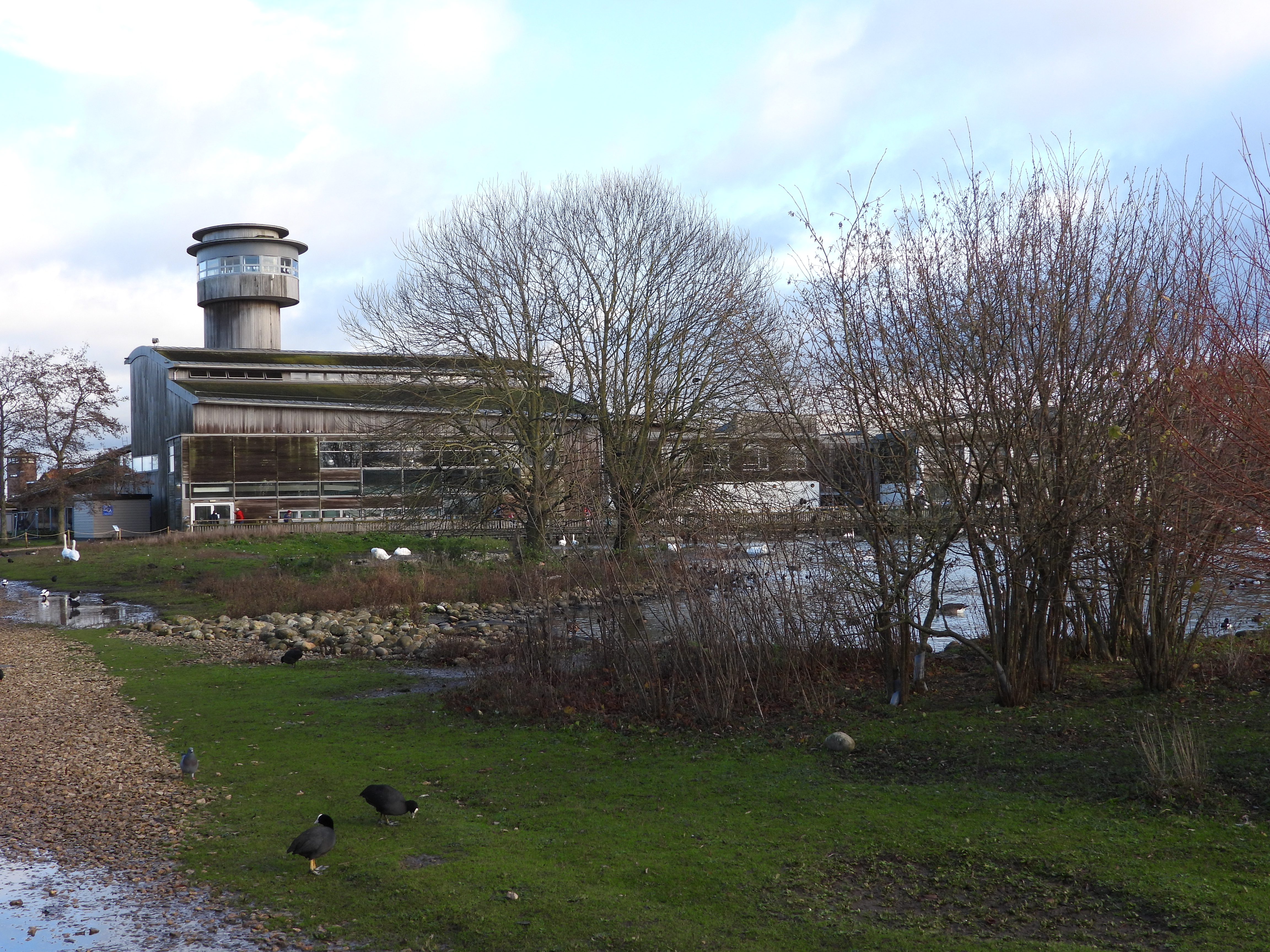
I last went to Slimbridge ten years ago with my children. It was very sobering to visit again this week and to see it not through their eyes – there is nothing like seeing things in that way, a renewal of the sense of wonder – but with the experience and knowledge, cynicism perhaps, gained since. There was not the warm sunshine of 2014, with the canoe safari experience which the children loved, but a cold albeit bright and mostly clear day. The building itself is singularly unprepossessing. The ponds immediately in front of it are well populated, the birds there drawn in by the lure of easy food. Photography is a piece of cake, you can get so close to them, indeed they seem virtually tame. Beyond the reserve the truly wild wading birds were disappointingly mostly absent, but that is wildlife for you, it cannot be predicted. Serendipity is one of the great joys of nature. Still, there were plenty of species of ducks and geese within the reserve, Coots, Moorhens and Mute Swans too. Aside from that there are some to my mind rather tawdry theme park style attractions, such as an otter enclosure.
The centre (then the Severn Wildfowl Trust) was famously founded by Sir Peter Scott, the only child of Antarctic explorer Robert Falcon Scott, in 1946, whose interest in birds began with observing and shooting them. Nevertheless, I do not doubt his worthy intentions, nor indeed the overall aims of the centre today. But, and it is a big but, as I stood looking at the flamingos (they have all six species across the WWT centres, Chilean, the first import in 1961, Andean, James’s, Caribbean, Lesser and Greater), I suddenly asked myself what they were doing there. The reason is obvious: they are a puller of crowds. The notorious Flamingoland in Yorkshire is called that for a reason. Perhaps it was worth their sacrifice for the greater good, I wondered. But although they do well in terms of breeding, they are not suited to, have not evolved for this climate. When it is icy they have to be kept in for danger of slipping and breaking bones. Of course they have not evolved to cope with that. For some other reason, one large flock was still inside in the late morning (it wasn’t that cold) and I peered in through the dirty glass. It was a dark and featureless shed with no enrichment whatsoever.
Then I realised that they must have their wings clipped, the cruel taking away of that thing that most birds are made to do – to fly. It is much worse than that though. It is not a matter of clipping feathers at Slimbridge, young chicks have their wings “pinioned”, partly amputated, without anaesthetic if they are ten days old or younger. The law requires veterinary supervision, but this provision was ignored at Slimbridge until 2013 when there was an investigation and exposé. Ricky Gervais said at the time: “The idea of amputating part of an animal’s limb in order to keep it in captivity is unacceptable.” Management claimed to be unaware of the law (not generally a valid excuse and how can they have been?) and changed the policy but not the practice itself. It is not an uncommon belief that flamingos cannot fly at all. There have been occasional escapes around the world when clipped feathers have grown back – but pinioning is permanent.
In a pitiful effort to justify the whole business, WWT argues that research helps to conserve birds in the wild, but all they can come up with is that they are able to know how much they need to eat. “This way, the habitat can be preserved and managed to encourage the growth of the right sorts of food that flamingos consume. By feeding captive birds the same types of food that they would eat in the wild (brine shrimps, worms, fly larvae, plant material) scientists can accurately measure how much food a flamingo can eat at a time, and how much energy it is getting from this food. What the researchers have noticed is that even if you give flamingos masses and masses of food, they are unable to consume more and more and more. Because of how their beak limits what they can consume, as I said above.” Disingenuous nonsense of course.
Many ducks, geese and cranes are mutilated in the same way and so the pleasure of seeing them was almost entirely gone. I could not know if they were their by choice.
Not to all intents and purposes, but in many ways, Slimbridge is in fact a zoo. I don’t like zoos. London zoo as I remember it from my childhood was a ghastly animal prison, with elephants and bears kept in small concrete enclosures. I clearly remember a polar bear, stereotypically pacing back and forth, driven mad by his confinement. I would not visit Marwell zoo again having seen similar things there, nor any other really. Longleat was another favourite when the children were young and it is not as bad as most, but I don’t think I would go again now. I was told by someone who used to work there that the giraffes were treated badly and carelessly out of sight of the public and when the tv cameras were not rolling. These animals from hot or cold climates should not be imprisoned in the UK for our entertainment. Of the photographs I took, below, I am most pleased with the close-up of the Greylag Goose feathers, the water droplets on a Coot’s back and the Rook, which was less than two feet from me. Only the Avocets and Godwits were at some distance. The hide windows are high and narrow and so my hide clamp and gimbal kit was not suitable.


Greylag Goose


Male and female Eider Ducks, with their curiously angular heads

Swan Goose

Bar-headed Goose

Ashy-headed Goose

Flamingo


Male and female Tufted Duck


Teal


Shelduck

Female Redhead
Goldeneye


Coot

Avocets


Black-tailed Godwits

Black-headed Gull

Common Gull

Mute Swans

Rook
From the RSPB.
This has been a bumper year for Bitterns, and good for Cranes, Spoonbills, Turtle Doves and Curlew. The introduction of a wasp to control invasive insects which were killing trees to Nightingale Island in the South Atlantic has saved the Wilkins’ Bunting, which depends on the trees for food, one of the world’s rarest birds. The closure of sandeel fisheries in the English waters of the North Sea and all Scottish waters has greatly helped seabirds. Albatross deaths through bycatch have been hugely reduced thanks to the RSPB and Birdlife experts, working together with fishing crews. The Big Garden Birdwatch resulted in the recording of 9.7 million birds involving 610,000 people. 100,000 records were submitted to Swift Mapper, the online mapping and conservation targeting system. The Saiga Antelope population in the deserts of Kazakhstan is now thriving, back from the brink of extinction, with support from the RSPB and the involvement of local communities. £4.9m was raised for peatland restoration in the UK. Finally, there is mention of the Restore Nature Now march and “a groundswell of support for nature-friendly farming”.
Leave a Reply