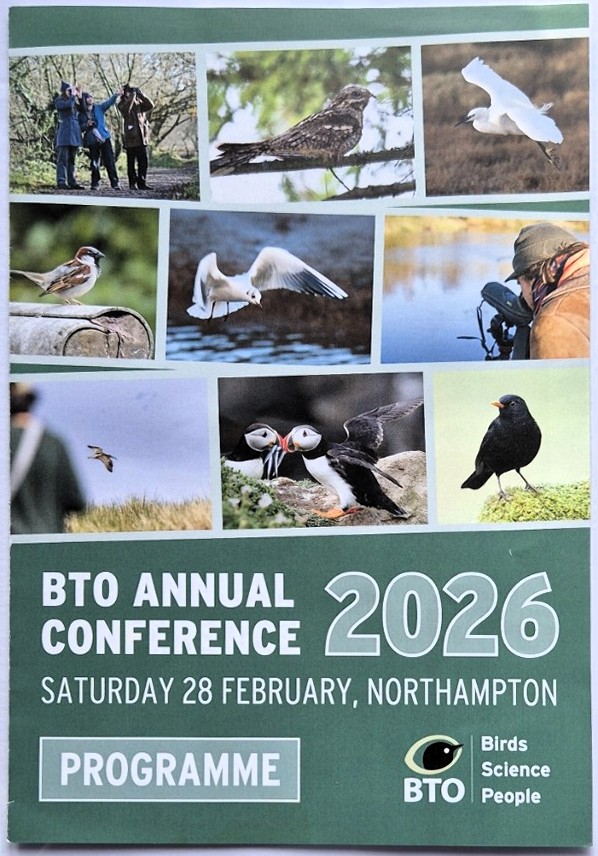
In most respects this was as rewarding as it was last year. It was tiring. The lovely lady I was next to said that she also felt exhausted having taken in so much information.
The venue was the Mercure Hotel in Northampton. I understand the need for a fairly central location but this was not a good choice. I am not sure that I have been to Northampton before. No doubt I did not see the best of it but suffice to say the state of the roads made the heavily potholed country lanes around here look smooth. There’s a joke that the police are now stopping drivers proceeding in a straight line. My car suffered over £2,000 worth of damage in 2024, my daughter had a puncture just yesterday, from potholes. It is a matter of constantly swerving when that is possible. But in Northampton they are not so much potholes as crevasses, right in the busy city centre, on narrow strips of road where they are unavoidable.
Everything about the Mercure screamed 1970s – not in a good way. Brutalist concrete architecture and not even enough parking for the attendees. Inside the furnishings all seemed very 70s too, in spite of a £1.4m refurb in 2024. I checked and the hotel was indeed built in 1973 and it looks as though nothing at all has changed since then. I can’t imagine what they spent the money on. The furniture in the bar and elsewhere is of the golf/yacht club/airport lounge/bottom end motorway service station type. The carpet in the conference room says it all.

Note the gaffer tape repair – at least replace the worn tape. Especially for a room full of by nature quite observant people. This was symptomatic of the air of neglect and defeat that hung over the place. The staff tried hard but I felt they knew it was a losing battle. The conference takes about 400 people (a rough guess on my part), all paying £55. For that I expected at least a decent cup of coffee, not lukewarm brown water from a vacuum flask. And the breakfast food? Anything you like as long as it’s a cold croissant. At the BTO’s request the food was entirely vegetarian and I am all for that but not being given even a choice between dairy and oat milk seemed antediluvian and even negligent. Oat milk really isn’t niche any more. Lunch consisted of various types of sludge. And bread rolls but no butter. I tried the noodles but they were tasteless and cold, so I went to the bar and had what was, to be fair, a delicious plate of tempura prawns. The provided red berry cheesecake was inedible and tasted of plastic. There was some sort of manager wearing a face mask and strutting about the place doing nothing very much. For some reason, probably a power trip, he kettled us in before allowing us through the exit doors for lunch. Surely they had had all morning to prepare for the moment?
The opulent Midland Hotel in Manchester last year was more like it – just actually a nice place to be with good coffee and good food. And why not? There seems to be an assumption sometimes by wildlife groups and tour organisers that because we are there for the wildlife we don’t care about comfort or our surroundings. But we shouldn’t have to wear hair shirts. I don’t mind roughing it although I do like my creature comforts more these days, but this just felt cheap and tacky. Why not both – not opulence necessarily, but get at least the basics right? One company put me in the Marwell hotel near the zoo which was so cold and soulless (and the staff so unwelcoming and rude) that I drove home rather than stay there and drove back in the morning. Definitely false economy on their part and really terrible, lazy management.
So the Midland set the bar high but this was a plummet in standards. I have no reason to believe that the BTO is in other than robust financial state. Whether that’s the case or not cutting costs at members’ expense in this way seems a perverse way to go.
To the talks. CEO Juliet Vickery was first up. I was impressed by her last year and she did not disappoint, emphasising the BTO’s core values: Birds, Science, People. She spoke of the joy and wonder of a visit to a Kittiwake colony and her concern that songbirds are showing 5% less body fat for their migrations. This comes from a huge dataset. Life is getting tougher for them. The Bird Atlas 2027-2031 is under way or about to be. This is the fifth, the last was for 2007-2011. It will be paid for from £2.5m the BTO received in legacies last year. As a bookseller I am all for printed paper and hefty tomes but I am surprised to learn that there are no definite plans for a digital version as well. It seems bizarre and will make the information available only to those who can afford the book. It will, understandably, not be cheap.
Greg Conway spoke about Nightjar ecology. They are exceptionally well camouflaged birds who winter in Africa. Their diet consists of moths and beetles. They were red listed but the population has grown although they are still amber. What is noticeable is that their range is much smaller. There is a network of protected sites but since they are not active during the day they are hard to survey. Patches of bare ground are essential for nesting and some management is needed, their preferred habitat being heathland and plantation forest. Nest monitoring is also crucial. Failures are mostly down to foxes, badgers and wet weather leading to saturated ground. Analysis of faecal matter shows that they ignore small moths, concentrating on the medium to large. But the macromoth population declined by 33% between pre-1970 and 2021. Nightjars are tracked using GPS, the tags designed to stay on for about a week. These show that they forage between up to 1 km and 5 km away in brief, back and forth trips, so the foraging areas need protecting too. The best way is not to create trails and not burning, but small-scale intervention, to cut holes in the heather affording protection for the nests.
The intense thunderstorms (which are becoming more frequent and severe) of May 2023 impeded migration, foraging, reproduction and survival. By 2025 the population had recovered somewhat but was still only at 50% of pre-1970 levels.
Kate Philips went into more depth about the forthcoming Bird Atlas. You can’t conserve birds if you don’t know where they are. It will cover all species in Britain, Ireland, the Isle of Man and the Channel Islands and will provide evidence to inform conservation action. We know that Dunlin and Ringed Plover, for example, are red listed but we need more data. This will be a triumph of large scale citizen science over a number of years involving tens of thousands of surveyors spending millions of hours of their time.
The methodology is robust. A Tetrad is a 2 x 2 km square and each is visited a minimum of eight times for between one and two hours, at least two of the visits being in the breeding season and two in the winter. Use will also be made though of casual recording and the data will guide conservation efforts for years to come.
Arran Folly asked ‘Where Have All the Blackbirds Gone?’ He is a bee specialist from the government’s Animal and Plant Health Agency. The Usutu virus is the UK’s first mosquito-borne zoontic virus. Only the females consume blood, acting as a bridge vector. The first outbreak was in 2020, noted especially in London. The Blackbird population crashed by between 50 and 75%. A temperate winter enabled the mosquitoes to enter diapause and overwinter. Sampling of live wild birds has been undertaken whilst data from wildlife rehab centres has also been extremely useful. The Usutu virus affects juveniles most who have not been previously exposed, more antibodies being found in adult birds. Urban environments favour the mosquitoes, being warmer and with plenty of stagnant water (one way to help is to make sure our gardens do not have stagnant water). During moult sightings are naturally expected to dip but Blackbirds are not bouncing back. The virus may also be coming in from migrating birds.
At the end of the talk I felt that two crucial and obvious questions had not been answered – why London in particular and why Blackbirds in particular. So I asked them. Mr Folly did not seem at all pleased and answered in a rather irritated fashion. He said though that Blackbirds die because of their [extreme] immune response which is species specific and that London was where the statistics are. I suspect he is a person who is very reluctant to say that we don’t really know.
Emma Caulfield reported on the results of the Winter Gull Survey 2023/4. Greater Black-backed and Common Gulls have recently gone from amber to red. For twenty years we have had no data for wintering gulls, which are a distinct population. There is a reliance on evening congregations – daytime is much trickier because gulls are all over the place. The results for 2024/5 are in prep and we were therefore asked not to quote them but it seems there has been a terrible decline, possibly around 40% overall in twenty years. Some species are faring worse than others. The Herring Gull population is stable and the Mediterranean Gull seems to be doing really well but it may just be that we are seeing more here because of climate change.
Clare Bishop’s enthusiasm for her subject, Carmarthenshire heronries (“I am a heron addict”) was extremely infectious. There was lovely photograph of a male giving a twig to a female for her to place on their nest. The first census of Herons was in 1928 and that has become the world’s longest-running survey of a single species. One heronry has been active since around 1750. Little Egrets have now been seen co-locating, a bit later in the year and lower down in the trees.
We were able to take away a summary of the 2025 census. It now includes Cormorants, Little, Great and Cattle Egrets and Spoonbills. The Grey Heron population estimate is 9,301 Apparently Occupied Nests (AONs), well below the peak of some 13,000 in the early 2000s but not dissimilar to the 1928 figure. Little Egrets, probably my favourite bird (along with other Egrets), show an estimate of 2,145 to 2,500 pairs for the UK and Channel Islands. 2,443 Cormorant AONs were recorded at Heronry sites.

This was the first of the afternoon’s speed talks, the other mostly about engagement, especially of young people – the protectors of the future. Youth networks are being expanded, data is to be gathered using a new, simple app, from Greenspaces, to better inform councils, park managers and the like. Jasmine Smith told us of her experience ringing on a remote island. She said that our enthusiasm on the day was infectious. That was mutual.
I spoke to a delightfully effusive ringer – we had a smoke together outside – expressing my long-standing concerns about the effects of ringing on individual birds and in particular the neck collars attached to Greylag Geese. In spite of his assurances I find it hard to believe that these collars, which are not small, do not affect behaviour at all. I had been perturbed by this image in the most recent BTO News and even more so by photographic images I had found online.

Jen Donelan has been one of the trainers on the many BTO bird ID Zoom courses I have hugely enjoyed. The plan now is to introduce pre-loaded modules. I was one of many survey respondents who said that they hoped these would not replace the existing interactive versions. Although there will be ‘drop-in options’ I was surprised by her answer to an attendee’s question, which assumed that the new versions would be free (costs of course would be very significantly lower). No, they would cost at least the same and very likely more. I wouldn’t pay £24 for them.
During the breaks, I asked the producers of Bird Table whether they would be changing the name (the RSPB has stopped even selling bird tables since they are thought to harbour disease especially affecting Greenfinches). I was told it had been discussed but was puzzled that the lady I spoke to seemed surprised by the question. They are waiting, in any case, for more information.


More happily, I was delighted to buy this print of a beautiful pencil drawing of a Golden Eagle by Ruth Walker. Fortunately at 10 x 10 inches I can get a standard frame for it. I had to pay an extortionate £67 recently to frame another print of 7.5 inches square and it was already mounted.
The eyes say it all.

Leave a Reply