The primary purpose of this trip was to pick up the Bath Two Tunnels Circuit and cycle through the Combe Down Tunnel which promises an unusual audio-visual experience. That was an epic fail. I tried to drive to Tucking Aqueduct and to pick up the trail in various other places, but I had no joy. After an hour of driving around in circles along extremely narrow lanes, rural and urban, where passing another car was next to impossible, I lost the will and it will again have to wait for another day.
I was pleased to return to BoA though and explore further. Even the view from the car park was pretty lovely.

Then across the McKeever footbridge, renamed for a local Olympic gold medallist kayak sprinter.


Immediately in front of me was Holy Trinity Church.


Traces of the original Norman construction remain. Additions were made in the fourteenth and fifteenth centuries and during the late fifteenth and sixteenth centuries much was rebuilt in the perpendicular style. By the nineteenth century neglect had taken a toll and a major rebuild was undertaken. The churchyard was very tranquil.


A steep climb up to the chapel of St Mary, Tory, followed, with stunning views over the town.


The chapel, sometimes called a hermitage in the old records, is believed to have been built in the late fifteenth or early sixteenth century but this too had to be rebuilt in the late nineteenth century having fallen into ruin after a period when it served as a cloth factory. It is truly a haven of peace and quiet.

The beautiful stained glass window replaced plain glass in 1999. The donor, anonymous at the time, Enid German prayed for inspiration for the central design, and appointed the artist Mark Angus to create the whole.


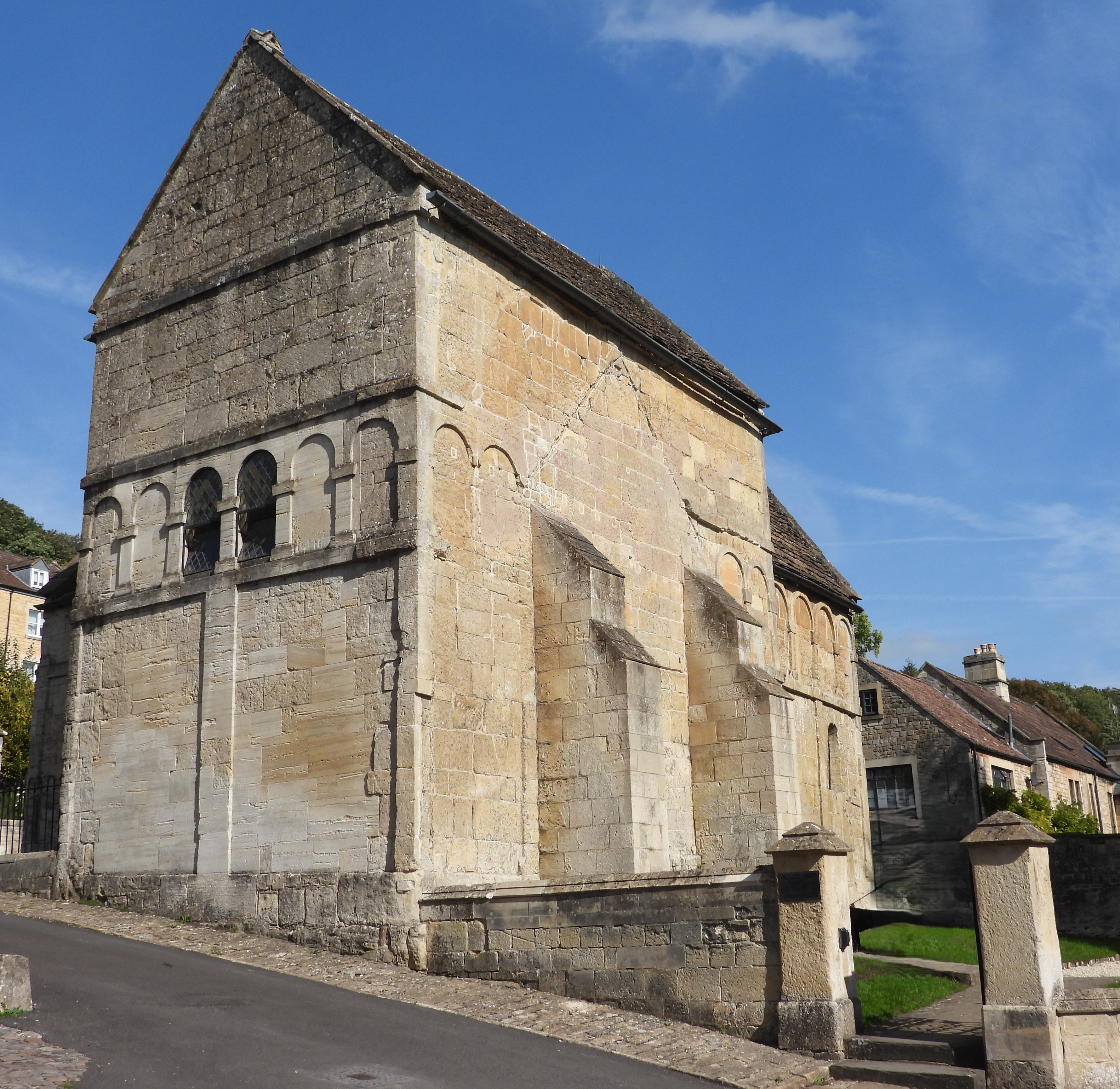
Back down the hill to the Saxon church (see also photo at head of post).


The weather had turned pleasingly hot and sunny so I divested myself of far more layers than I needed before taking in more architecture.
This is The Chantry, founded 1420, a clothier’s house in the seventeenth and eighteenth centuries.

The Old Church House, c.1500, built by another clothier, serving as a school at various times, restored in 1918 and given to the freemasons (for some reason).

The Catholic church.

The Iron Duke.

This was used to mix rubber and reinforcing fabric sheets of varying thickness, such as capes and footwear for troops in the Crimean War, some of the earliest products. Designed in America, named after the Duke of Wellington, it was built in around 1848. Stephen Moulton & Co. was the first of a number of companies in the rubber industry by which the town was dominated for nearly 150 years. Tennis balls were still being made locally until the 1980s. The machine belongs now to the Bradford on Avon Museum.
BoA is full of hidden paths and alleyways and courtyards: lots of cafés, restaurants, pubs and charity shops, but sadly fewer than expected small independent shops, even in The Shambles. Okapi Studios in Weavers Walk was a delight and I acquired these two beguiling, simple but delicate pieces by Amelia Harvey.


On The Shambles there’s the Ex Libris bookshop. The owner was charming. The shop is quite dark though – new books at the front, secondhand up and back. I have no idea how he makes a living. I made a couple of courtesy purchases. I have found in my bookselling career that these tend to work out pretty well – karma perhaps. The book on migration was published in 1980 and I later questioned the wisdom of purchasing it – we have learnt so much on that subject in 45 years – but it looks to be an interesting overview of a complex topic which I feel I have never begun to really get my head around (are those geese coming or going?) and it’s good to have a hard copy of anything by Thorburn (passim). The two volumes cost me the paltry grand total of £5.50. But anything to support an independent bookshop.


Wanting to sit outside in the sunshine but perhaps unfairly fearing what I call prime location syndrome (where pubs don’t bother too much much with the quality of their food because they have a captive audience) I headed out to Monkton Combe for lunch at The Wheelwrights.
Following my abortive attempts to connect to Combe Down Tunnel, artist Kate Westcott (see The Kennet & Avon Canal Part XIII – mission accomplished – Animal Wild) kindly allowed me to visit her beautiful home not far away to collect the exquisite wire tree I had bought from her (too fragile to consign to the post). The photo does not do it justice.

Leave a Reply