Octopus and Elephant Documentaries
I had eagerly awaited Phoebe Waller-Bridge’s two-part documentary about octopuses. It is the second worst wildlife documentary I have ever seen. I lasted about fifteen minutes, so it’s not impossible I am being unfair. It opened with a sequence of an octopus selecting football match winners and continued with a lot of guff from the American actor Tracy Morgan (who was excellent in 30 Rock). He collects mostly venomous animals for some reason and is especially keen on octopuses, but at least one of the tanks in which he keeps them in isolation was barely bigger than the animal itself. Any which way, I found Phoebe Waller-Bridge’s voice and commentary very irritating. Far, far better is the 2020 documentary My Octopus Teacher, which I wrote about in Animal Wild:
Craig Foster’s wonderful, powerful film, My Octopus Teacher, shows him forging a remarkable, profound relationship with a wild Common Octopus in a South African kelp forest. It has done a great deal to raise awareness and makes us realise just how complex these creatures are, “as smart as a dog or a three-year-old child”.
I watched instead over the last two days two excellent programmes about elephants, The Giant Genius – Inside the Mind of an Elephant (The Giant Genius – Inside the Mind of an Elephant | Free Documentary Nature) and another about the population around the Victoria Falls. The first illuminates in particular how elephants observe and study us and adjust their behaviour accordingly (migrating by night for safety for instance). Even here there were a couple of tests which made me uncomfortable, themselves altering natural behaviour. One was the mirror test, often used to assess the intelligence of a species, but I wondered if elephants do not already see and know their reflections from drinking from pools of water. The other exploited their subsonic communications, information being transmitted through the ground. A speaker was buried to play an alarm rumble specifically warning of the presence of a lion. The herd paused and left. That just doesn’t seem quite fair to me. Nevertheless, it’s a mind-opening watch.
Camp Beagle
See Wonders of wildlife in Norfolk part I – Animal Wild:
“The protest site has existed outside Marshall Bioresources (MBR) Acres, a factory breeding puppies for cruel and pointless experiments, since June 2021 and it will not be going away. It even has its own official traffic signs on the busy road on which it is situated. I felt it would be intrusive to photograph the four army-style tents in which the protestors live, but these pictures show the terrible lie plastered onto the gates of the factory and the responses on the other side of the road.”
Another day of protest is planned for the 24th May. It is deeply inspiring that the protestors will simply not give up.
PETA, Cows and Chickens
I am grateful to Lily Baker, a philanthropic specialist at PETA, to whom I wrote months ago wondering if more could be done to counter the misleading claims and images used by the dairy industry, depicting happy cows dancing around in sunny fields, which could not be further from the truth. Impressively, she remembered and has followed up with news of accusations against the Happy Egg Co for misleading customers over chicken welfare. Investigations have revealed a disconnect, to put it mildly, between the marketing material and the grim reality. Happy Egg Co accused of misleading customers in CMA complaint | The Grocer
If the complaint is successful, it could be a major breakthrough.
Dimming the Sun
The government looks set to approve experiments to fight global warming. This one seems like a really, really bad idea, one of those things we mess with at our peril. It’s a distraction from lowering carbon emissions and we cannot know what the knock-on effects might be.
Sycamore Gap (and the Enfield Oak)
Two men have now been found guilty of cutting down the sycamore and see here for Toby Carvery and the Enfield Oak: Gallimaufry: Badgers, birds and birdsong, royal hands, Coyotes, an Oak Tree, a Colossal Squid, a Slow Worm & aliens – Animal Wild
What is so strange about the Sycamore is that the culprits seem to have no idea why they did it.
Protect the Wild
A list arrives of their wonderful achievements in just a few months, which I hope they will not mind my simply reproducing here:
“If you’ve been with Protect the Wild for a while, you’ll know we don’t slow down. We move fast, we work hard, and we never stop pushing — because wildlife doesn’t have time to wait.
Thanks to your support, the first four months of this year have been some of our most impactful yet. Together, we’ve:
- 🚨 Launched HuntHavoc.info, exposing the chaos hunts cause to people, pets, roads, and communities
- ✍️ Smashed past 175,000 signatures on our petition for a real, meaningful hunting ban
- 📨 Rolled out an instant MP email tool, making political pressure faster than ever
- 💚 Begun funding free mental health sessions for frontline animal rights activists
- 🩸 Grown BloodBusiness.info to over 1,000 companies linked to hunting and shooting
- 📰 Published 100+ hard-hitting articles, uncovering everything from hound deaths to estate abuses
- 🎨 Produced a viral animation to ban snares in England – racking up over 6 million views and generating 60,000+ letters sent to Govt ministers pushing for a ban
- 📊 Nearly completed our Annual Hunting Report, with more major reports on the way
- 🐦 Launched End Bird Shooting, a bold new campaign to dismantle the shooting industry from the ground up”
Swifts
A talk given locally by Ailsa Claybourn was excellent, with a good turnout of some 30 people. Ailsa identifies as an enthusiast rather than an expert but she knows a lot. She used to be a schoolteacher and that is obvious – I bet she was really good at it.
I have read a book which is only about Swifts, but still there was much to learn from Ailsa. These extraordinary birds weigh just 40g but can travel four million miles in a lifetime and can eat 20,000 insects in a day. They are clean and tidy nesters to the extent of eating their offspring’s excrement (so there is no waste). The species is in a family of its own, the nearest relatives being, surprisingly, hummingbirds. The taxonomic connection is to do with how their wings are wired. They are not hirundines (swallows and martins) but Apus apus, which means “no feet, no feet”. Of course they do have feet but they are tiny and the birds cannot perch, spending almost their entire lives on the wing, even to sleep which they do by shutting down one half of their brains at a time. They cannot take off from the ground either but they are true masters of the air. They do use their feet and small beaks (which nevertheless open wide to drink and eat) for fighting. Their eyes are very deep-set for reasons of aerodynamics and they have eyelashes to stop insects going into their eyes. They feed in the “aerial soup” at around 10,000 feet but do not do well in bad weather (which they can see coming), so the babies have evolved to go into a state of torpor if there is a prolonged absence – they can be left for as long as three days. They adults can travel as much as 500 miles a day to find food and are site faithful – if their old nest has gone, they will probably never breed again.
Swifts fly much higher to sleep and slow down to 25 mph or so. This, delightfully, is known as the vesper flight. They use the stars for navigation and have the longest wings in proportion to the rest of their bodies of any bird.
Ailsa also said that they were the fastest birds on earth in level flight. I asked her about this since I had just read in Seán Ronayne’s wonderful Nature Boy; a journey of birdsong and belonging, Hachette Books, 2024 (Nature Boy – Animal Wild) that Eider Ducks hold that record. I have done a bit of research and it seems that the jury is very much out. For one thing, the measuring is very hard to do and some of the evidence is unverified. Peregrine Falcons are famously the fastest animals on the planet when they dive but in level flight there is a good deal of conflicting information. The consensus seems to be that the fastest of all is the White-throated Needletail, Hirundapus caudacutus (still not a hirundine in spite of the Latin name), 105 mph. It’s a type of swift, which would leave Ailsa’s claim secure (the clue is in the name after all). The Common Swift manages 69.3 mph, but the Red-Breasted Merganser achieves 81 mph, the Eider 76 mph. But none of the numbers are definitively certain.
Ailsa’s passion for Swifts ran through her talk, but she could hardly not address the 66% decline in numbers we have seen over the past 25 years. Yet again, all the usual suspects: the demolition and refurbishment of old buildings, climate change leading to unpredictable weather, our destruction of so-called weeds (a word which should really join the likes of vermin and pest, long since eschewed by Chris Packham), and of course the Insect Apocalypse brought on by modern ecocidal, suicidal farming methods.
We can help by installing nest boxes and callers, and listening to Hannah Bourne-Taylor of the famous 2022 Feather Speech, asking simply for (cheap) swift bricks to be made compulsory in all new housing developments. She has been tireless in spite of every setback and disappointment. But even though the building trade is in favour, the mandatory element looks to be withdrawn: the Reform party is against it and Labour are scared that they will be labelled as “woke”. Depressing and pathetic.
Ailsa concluded with advice about the boxes and where best to place them (they need to be at least 5m high, for example, since Swifts swoop in from below, away from flat roofs which provide opportunities for predators, and preferably face north or east, otherwise to be painted white).
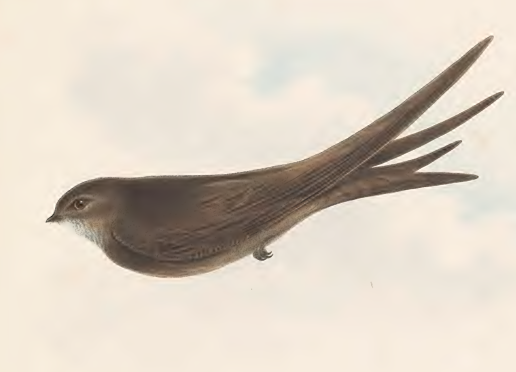
The image at the top of the post is from Meyer (Henry Leonard). Illustrations of British Birds, c.1835-1844.
A Badger in Daytime
Finally, a lovely video taken by my daughter. He or she had apparently been there for a long time before going back underground).
Leave a Reply