I found this issue of BTO News tough going, mostly because none of the news is good, especially when it comes to seabirds as has been widely reported. A piece on Yorkshire is, frankly, as depressing as the rest mostly recording species declines.
Birdwatch is altogether more upbeat, reporting the upswing in the Cornish Chough population, a bird I would love to see, and the typically excited sightings of a variety of rarities. Jennifer Sizeland argues for more care in terms of the welfare of wildlife when it comes to filming and cites the case of The Witcher (Netflix) – Natural England are being very coy when it comes to questions from Wild Justice about this. Mark Avery eschews his usual wit to express his severe concerns about the directions in which the RSPB is heading, fearing that it is is in decline and losing sight of what should be its core activities. There’s also a long piece about Filey in Yorkshire, the subject of a talk I attended at the recent Spurn Migration Festival.
The story of Marion Island, 2,300km south of Cape Town, and attempts to protect it as a crucial haven for seabird colonies is instructive. Five cats introduced in 1949 to control mice at the meteorological station quickly became a substantial feral population killing an estimated 450,000 seabirds each year by the 1970s and causing four local extinctions. Cats were eliminated by 1991 – but now mice flourish and the future is uncertain. The plan is to spread rodenticide across the entire island from a fleet of helicopters. I do hope they have thought things through.
There’s a long, beautifully illustrated piece about varieties of Stonechats and their complex taxonomy. Offshore oil and gas platforms in the North Sea, we learn, provide useful resting stops for a surprising variety of species including Long-eared and Short-eared Owls. Red Grouse of the ‘glorious’ 12th bloodlust delirium, now have a more natural population level in Wales and Ireland where former managed grouse estates are now absent. In England of course the population is vastly and artificially inflated by the shooting industry with its burnings and culling of raptors and other dark practices. The industry claims this benefits waders and that is not, I have been told, entirely untrue – but how much better, argues Simon Papps, for this to be achieved by rewilding.
On which subject, the indefatigable Chris Packham is calling on the Church of England to rewild some of its holdings with a march planned for October 6th in London. The Church owns 105,000 acres of land and there are still 26 bishops in the House of Lords, elected of course by no one at all. And yet they are exempted from the Freedom of Information Act (no surprise there) and so we are starved of information about the nature of that land.
Alongside the rest of the scandals – the glasses, the clothes, the penthouse, the badger cull u-turn, it has now emerged that Keir Starmer’s Labour Party received, before the election, no less than £4m (four million pounds) from Quadrature, a hedge fund based in the tax haven of the Cayman Islands, which includes fossil fuel producers and arms manufacturers amongst its clients. So much for hope for the environment under the new government. For their £4m bung, they were rewarded with the appointment of a co-chair of the advisory board of Quadrature’s Climate Foundation as the UK government’s new ‘climate envoy’.
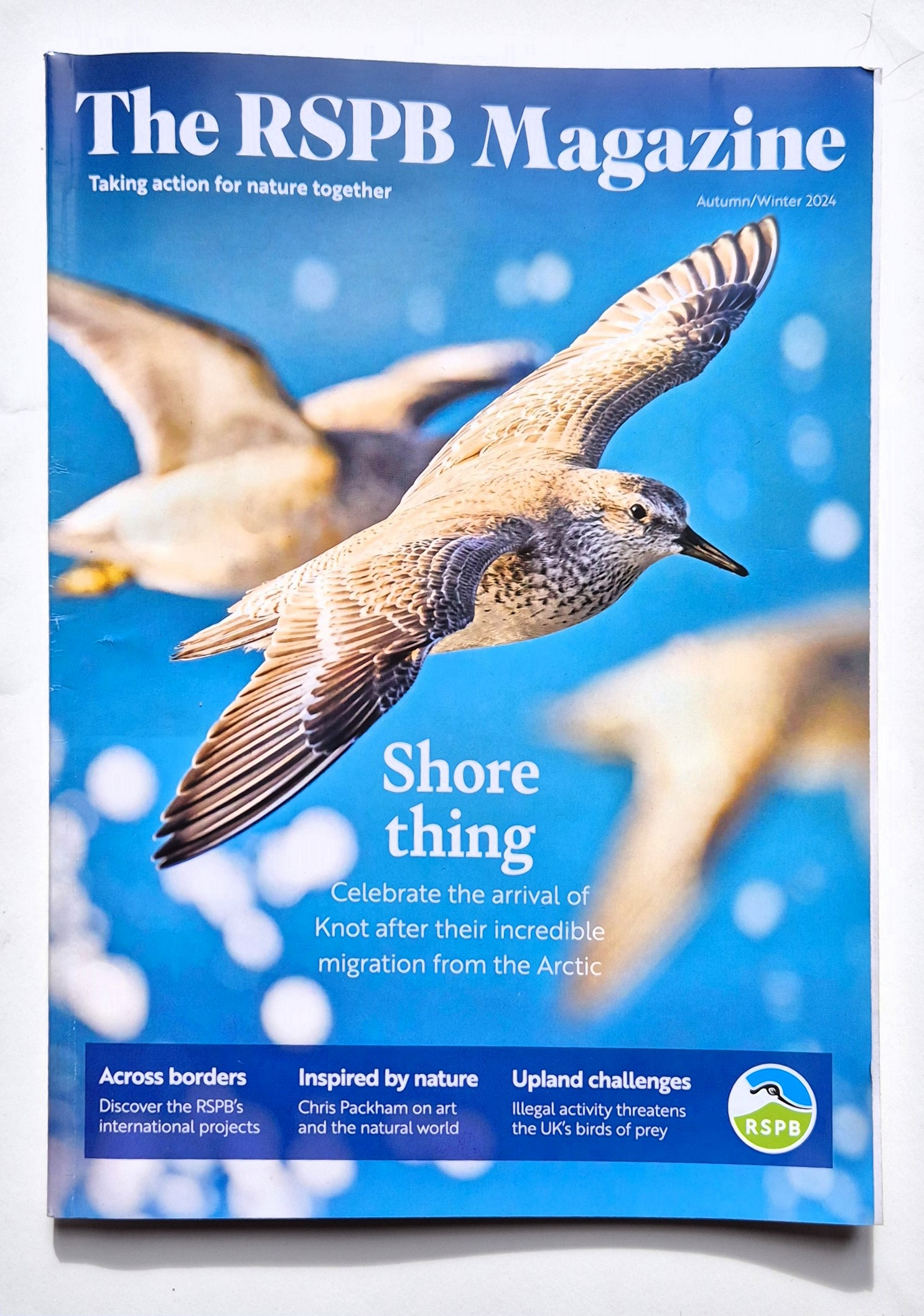
Given Mark Avery’s words, above, I turn to the RSPB’s magazine with wariness but fail to see from it, as he suggests I might, the problems to which he refers. Particularly pleasing is in article on Knots at Snettisham and elsewhere, given that I have just been privileged to witness the “Knot Spectacular” for the first time – see my posts “Wonders of wildlife in Norfolk.” An advocate for licensed Grouse shooting writes reasonably enough and does not try to hide the damage done by the ‘sport’, but simply banning the shooting of any birds, anywhere would be a better answer. We know these people will never self-regulate (they have had that chance over and over) and I have no faith that they will abide by the terms of any licences. Wildlife crime is of course notoriously difficult to monitor, prove or prosecute.
I also visited Titchwell Marsh during my recent trip to Norfolk. Lo and behold, there is an article about that beautiful haven too.
One reader has written in asking a question I have put to various informed people* about the strange behaviour of a Blue Tit in my garden which taps repeatedly on the fence (he or she is doing it right now) for no apparent reason. It seems that the answer may be (and it makes sense) that since the bird is not shaping a nest-box entrance or testing for sturdiness that it is simply territorial behaviour. I am a fan of Mark Avery, but learning of this possibility by chance as it were and with impeccable timing, is worth my annual membership alone.
*And in an earlier post:
British Wildlife magazine August 2024 – Animal Wild
Leave a Reply