This took place over the 6th, 7th and 8th September. I had been looking forward to ‘Migfest’ for weeks. It was a damp squib, literally and figuratively. My expectations had been way too high. I had imagined if not Glastonbury, at least WOMAD or a smaller festival but with birds instead of music.
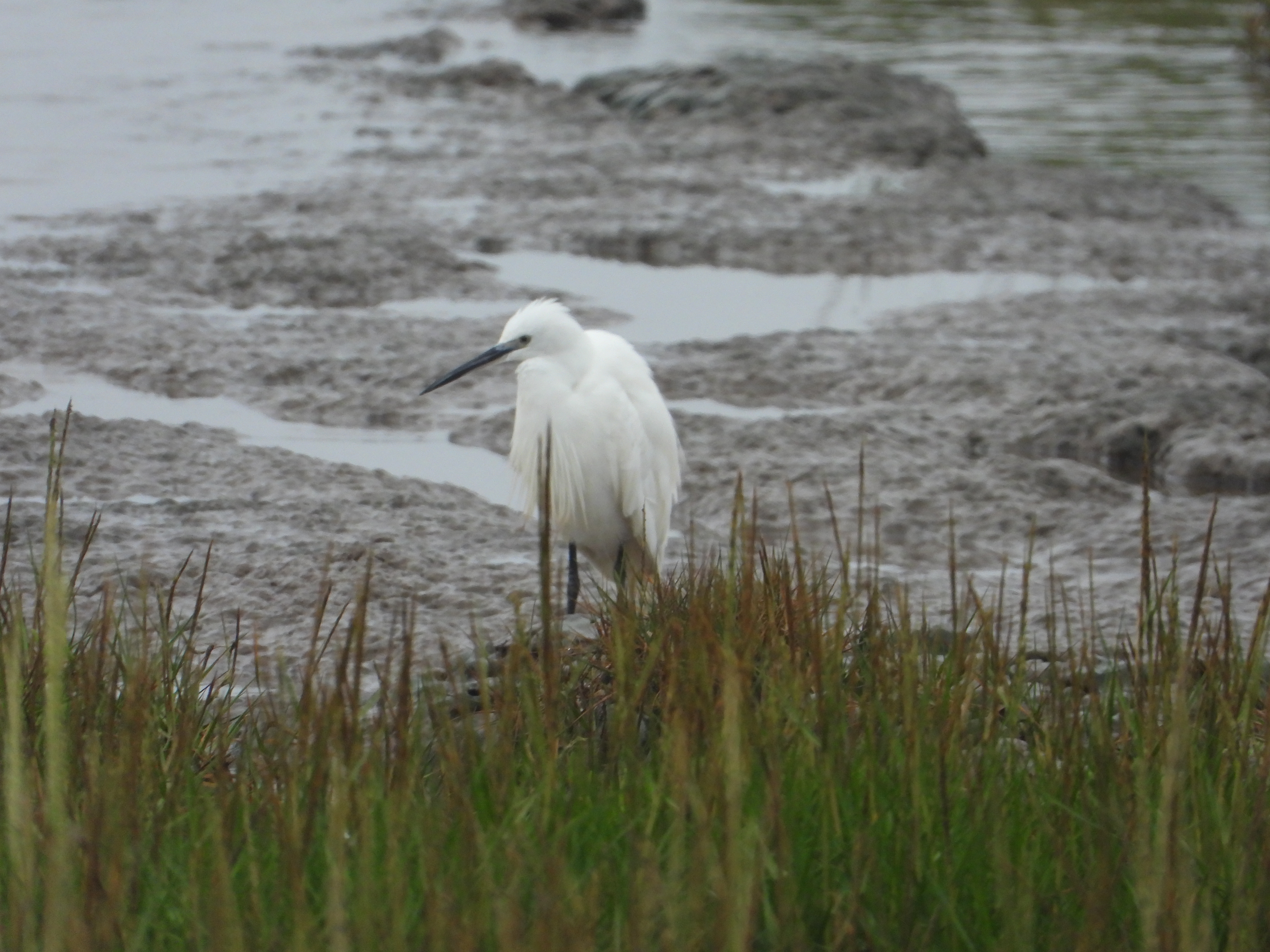
The main problem was the weather. Soon after I left home on Friday it turned into a gloriously clear and sunny day, but I spent it on the M1. There were endless speed limits related to the construction of those dangerous new emergency areas and very heavy traffic – it took me seven hours, including almost an hour just to get through Hull and by the time I had pitched my tent in the evening, the opening remarks and first lecture were as good as over so I missed them completely. The former might have given it all at least some sense of occasion. I had paid for premium camping, albeit not very much, which comprised a scrubby field and a rather ugly shower block of the kind one expects to come out of grubbier than when you went in. After that the weather was unremittingly grim. It either rained heavily or there was a constant drizzle, all was grey and murky. I heard a Curlew flying past when I woke up in the morning which gave me a little boost, but when I joined a short walk to see migrant birds, visibility was terrible and photographic attempts pretty much pointless (although I did manage the Little Egret above). Plus, there just weren’t very many birds.

I have just found some more notes I made so am updating to record that I did see juvenile Swallows, Shelduck, Curlew, both Common and Spotted Redshanks, Common Tern, Ringed Plover and Bar-tailed Godwit – so I may have been a little unfair above. I suppose the trouble was that I couldn’t see them very well.
The main site comprised two marquees and four small gazebos selling optical kit. I don’t wish to be unkind, especially as I have huge respect for the organisers, the British Trust for Ornithology, but the vibe was that of a low-end village fete. I found the stalls inside the main marquee rather uninspiring, although I did have a nice chat with the lady on that of Curlew Action. There was a very realistic Curlew skull on her table which turned out to have been 3D printed. There was food and drink inside but absolutely nowhere to sit and consume it, other than outside in the downpour. All rather odd. The nearby pub was the answer but although friendly enough, the food was, frankly, pretty dire.
Camping itself was just fine – ten out of ten to Coleman, the makers of my new tent, which stayed completely dry inside in spite of the best efforts of the elements. My airbed did keep deflating though. On Saturday night it rained hard throughout, but I did enjoy the sound of the waves and even the mournful calls of foghorns as cargo ships made their way up the Humber estuary.

During the day on Saturday otherwise, I went to three talks. One was about Filey Peninsula and was rather good, with a speaker who had that crucial skill of being able to share his enthusiasm. Birds, he explained, were coming in from the Arctic and of course liked peninsulas, the ‘sticky-out bits’, the first land after their sea journeys. He also talked of drift migration on easterly winds across the North Sea and the birds of prey following in pursuit of food. There were some great photos on the screen of some of the rarer visitors he had seen.
The second talk was fine, all about migration, a subject which fascinates me, but there was nothing I hadn’t already learnt from the BTO magazine – not the speaker’s fault of course. Except that I was pleased to understand that the cheaper geolocator tracking tags (as opposed to the GPS versions) work with a reasonable degree of accuracy simply by recording hours of daylight, from which location can be deduced.
The third, much trumpeted, was in the evening in the lecture marquee and was by the TV presenter Nigel Marven. Inside there was a strong smell of testosterone, unwashed poeple and damp clothes. Marven began by explaining that he was important in spite of not being on “bloody Springwatch” which seemed an odd way to start, after which we endured a five minute film clip of him being pursued by CGI dinosaurs and jumping into lakes. All rather macho with shades of Steve Irwin (not a fan). Then there was a picture of him with “the great man” Attenborough (also not a fan). At that point I walked out and once again retreated to my tent. I had lasted under ten minutes.

Somewhat ironically, a highlight for me was seeing these rather lovely Hebridean sheep, in spite of the bluetongue warning notice – a nasty disease which must be reported at government level, borne by insects and on on the rise, it is thought, because of climate change, warmer weather encouraging the carriers further north. This insect landed on my table shortly afterwards – not that I am accusing it of being responsible for anything.

What really surprised me above all, however, was how extraordinarily unfriendly people were, which is not what I have come to expect from people who love nature and wildlife. There was perhaps predictably rather a lot of competitive twitching and identifying, that rather condescending way of airing knowledge rather than generously sharing it. I am definitely not the twitching kind of birdwatcher (I am not keen on the the words ‘birder’ and ‘birding’, if only on linguistically aesthetic grounds). “Ortolan Bunting up at Warren,” I overheard. People swivelled round and trooped off that way. That bird is the one notoriously eaten by the French in particular, illegally. The beautiful little birds are caught during their migration south, kept alive for 21 days whilst they are fattened up to nearly triple their natural size (achieved by keeping them in darkness, which messes with their body clocks and eating patterns), then they are drowned in armagnac and eaten whole. For some reason diners cover their heads with a towel whilst doing so, perhaps to hide their shame. Perhaps it was me they didn’t like the look of, or perhaps everyone was just miserable (I don’t think I saw smiles or laughter from anyone throughout), but with the honourable exception of the guy who helped me put up my tent in the wind, I found myself repeatedly snubbed. There were only about ten tents in the field. On my way to the shower block in the morning another unhappy camper was coming the other way. “Good morning,” I said as brightly and breezily as I could muster. He completely blanked me. Had he not heard me or thought I had said something deeply offensive? I tried again with the same result, then it happened again with someone else. Sitting outside the pub at night, someone asked if he could sit at my table. Of course that was fine. In my last attempt at making conversation, I wondered aloud if the lights I could see on the other side of the estuary might be Grimsby. He silently looked away with an air of utter contempt. I understand that people on holiday can wish to be left alone, the last thing they want is to engage with a fellow human being, but this was just rude and unnecessary.
I do not wish to deter anyone from attending Migfest and I am sure that in decent weather it’s fine for a day or so, but on Sunday morning, when it was still raining heavily, with no prospect of respite, I decided to head for home. I suspect too that very few people will have travelled as far as I did. But for spectacle, which I had fondly hoped for, conviviality and joy in learning about and loving nature and wildlife, I would have to wait a couple of weeks for the Wildlife Worldwide trip to Norfolk, which provided all of that in spades.
Leave a Reply