I especially enjoyed in the April issue celebration of the rise in Bittern numbers in Britain and the admiration of the sheer beauty of the Garganey duck, otherwise known as the cricket teal. The bird is described as Western Palearctic. I have been seeing the second word quite often lately and was prompted to find out what it actually means. Unknown to me, it turns out the planet is divided into biogeographic realms based on terrestrial biodiversity. ChatGPT reveals the details of the most commonly used system:
- Nearctic Realm: Encompasses North America, including Greenland, and parts of Siberia.
- Palearctic Realm: Covers Europe, Asia north of the Himalayas, and northern Africa.
- Neotropical Realm: Includes Central and South America, as well as the Caribbean islands.
- Afrotropical Realm: Encompasses sub-Saharan Africa.
- Indo-Malayan Realm: Spans South Asia, Southeast Asia, and parts of East Asia.
- Australasian Realm: Includes Australia, New Guinea, New Zealand, and neighboring islands.
- Oceania Realm: Encompasses the Pacific Islands, excluding Hawaii.
- Antarctic Realm: Covers the continent of Antarctica and its surrounding waters.
The RSPB’s magazine meanwhile had an interesting piece on birds’ eye colours, which I had never thought about, and ongoing work to learn about and conserve the unsustainably hunted Turtle Dove.
Returning to Birdwatch, April, there’s an investigation of the impacts of seasonal shift on bird migration patterns and I applaud the global nature of the avian life discussed and depicted in the magazine generally A loosely inserted flyer in the May issue asks for support for LIPU-UK, a group working hard to bring an end to the slaughter of millions of songbirds in Italy for fun or to supply the illegal restaurant trade.
There’s wonderful news about the slow recovery of Osprey populations in the UK and as ever news of rare sightings and much beautiful photography. Mark Avery turns his attention to the controversial and widely publicised renaming of bird species by the American Ornithological Society. He sensibly argues that perhaps none of it matters terribly much, but I share his disquiet at the great bird artist John James Audubon’s name being removed from two species, imperfect an individual though he may have been. Somewhat mischievously (and I venture that Mark does like a bit of mischief), he wonders if birds named after Southern American Confederate states with little if any geographical precision should not also be renamed.
Similarly appealing to my inner geek is a piece by Sam Viles on assisted migration. Does a vagrant which has reached these shores using ocean-crossing ships as transport (which may have become routine for some) qualify as a ‘proper’ visitor? There are 50,000 commercial ships at sea at any moment, but assisted migration is far from a new phenomenon. Of course we can never know for certain whether a bird has taken advantage of one or more of them on its journey. The British Ornithologists’ Union Records Committee has devised various categories: Category A if the bird might be expected to have arrived naturally anyway and has not been directly helped by human intervention, Category E if not. Escapees from captivity also fall into the latter. But such treatment varies around the world. A Common Myna seen in Suffolk very probably had an assisted migration, another came here on Singapore Airlines arriving at Heathrow, business class. Different committees will treat these birds differently, but most of it comes from educated guesswork, not forgetting that sometimes birds end up in surprising places because they make mistakes. Absolute precision and consistency are clearly impossible. Yet another fascinating subject entirely new to me.
Sarah Harris writes eloquently and wittily about courtship and pair-bonding rituals to be seen in the UK and reminds us that these can be utterly bewitching as much among commoner as rarer species. She describes displays at a Black Grouse lek as “a bit like a nightclub, but less cringeworthy.” I will be keeping my eyes open but have already enjoyed the Wood Pigeons’ performances in the garden.
I was interested to note that Laughing Gulls are now visiting Belvide Reservoir in Staffordshire, birds which I have only seen in Jamaica, endlessly pictured in Animal Wild. Roseate Terns too, perhaps thanks to the flourishing colony on Coquet Island in Northumberland which I was lucky enough to see last year. I suppose I am a bit of a fair weather birder but there are so many amazing places to visit that I think I need to put up with a bit more weather and get on with it. I’m a bit disappointed to learn that you have to take out annual membership of the West Midland Bird Club to be able to visit Belvide though.
There’s a review of a new, revised edition of Avian Architecture: How Birds Engineer, Design and Build, by Peter Goodfellow, Princeton University Press, 2024. I am very tempted. I wonder how long, in view of the number of books still in a pile waiting to be read, I will be able to resist. Hmm, about two minutes. Ordered. I am reminded of the first time I saw a large badger sett properly, only a few years ago, when the word that kept springing to mind was “architecture”.
Weekly newsletters by e-mail from BirdGuides have also provided much information and delight, including the announcement of the return of Ospreys to Poole Harbour and a first egg, and a new study, the most comprehensive to date, which gives a shake-up to our understanding of the evolution of birds. There’s bad news too: further shootings of birds of prey in the UK and in America a plan to cull (murder) some 500,000 Barred Owls, prompting protest from a coalition of 75 animal rights and wildlife protection groups. The owls have been expanding their range and the cull is proposed to help a subspecies of Spotted Owl whose population is in steep decline. But it’s the same old story which I am becoming tired of telling in so many different contexts (although I will not stop). The Northern Spotted Owl is not in decline because they are in conflict with Barred Owls, they are in decline mostly because their habitat has been destroyed by logging. Whatever the solution to this man-made problem (conservation of remaining habitat for example) it cannot be the killing of half a million birds.
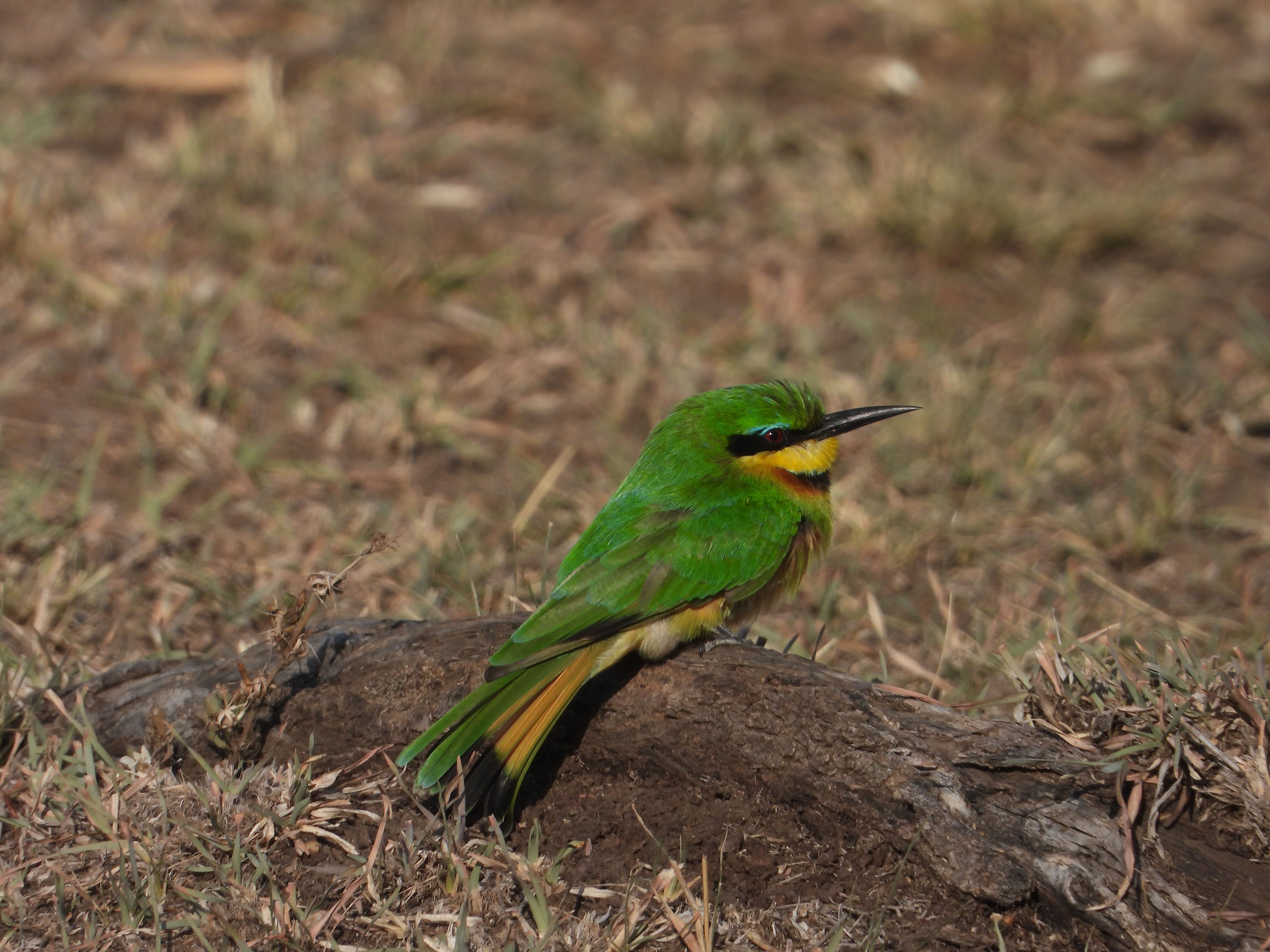
The photograph above shows a Bee-eater seen in Kenya.
Leave a Reply