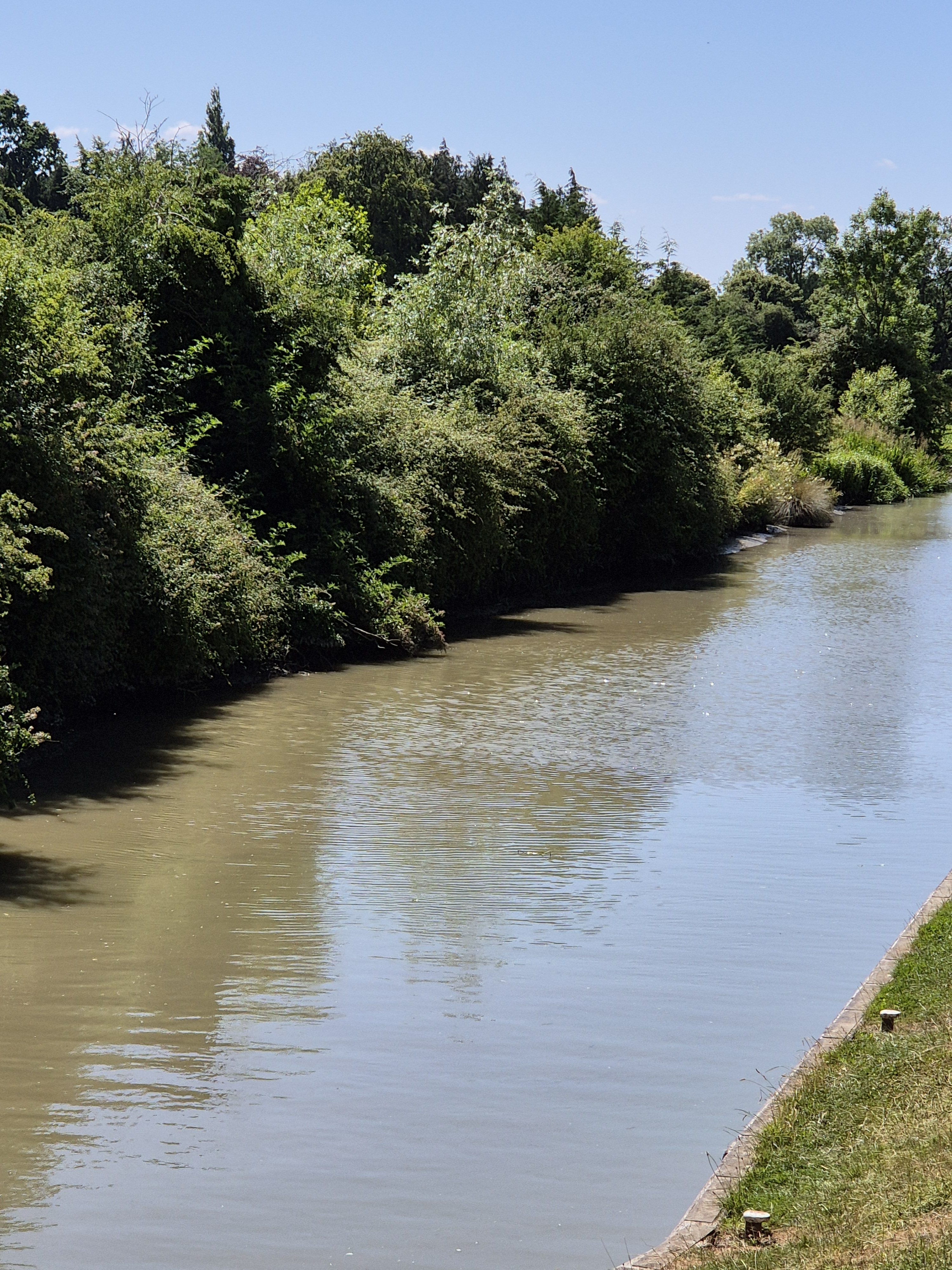
Caen to Seend Cleeve
I did not get nearly as far as I had hoped yesterday, having been aiming for Trowbridge. I’d been delayed leaving by a flat tire on the bike – only my second puncture so I haven’t fared too badly. But the bike came with very few instructions and it took me, ridiculously, the best part of two hours to get the rear wheel off and put in a new inner tube. I am not very mechanically minded but not too shabby with push bikes, but electric bikes are rather more complicated and I found the process far from intuitive. I was worried I would undo the wrong nut and end up with something I couldn’t fix, a pile of gubbins. There was a cable tie to snip and replace as well. It will be quicker next time. Good to know too that the rear and front wheel nuts are different sizes, so that’s another spanner in the panniers.
I expected a relatively smooth ride, but it was far from it and yesterday I found the constant bone shaking pretty exhausting. So just over three miles each way from the famous Caen locks, stopping at the Barge Inn at the strangely named hamlet of Seend Cleeve for lunch. Like so many prime location pubs, especially waterside, I think they have become a bit complacent about the food they serve (there are a number of complaints on Tripadvisor). The leek and potato soup was palatable but the bread really wasn’t.
I witnessed an unpleasant flare-up between two bargees – something about priority at a lock. It all seemed very unnecessary. People generally seemed more stand-offish than I have become used to along the canal.
Nevertheless there were plenty of unusual bridges and wildlife to enjoy, including good numbers of butterflies.
A lifting bridge at Caen marina, which is operated manually.

I assume these are fortifications, part of the defensive GHQ blue line from the Second World War.

There were blankets of beautiful water lilies stretching for hundreds of yards.


Great Willowherb, Epilobium hirsutum, also known as Hairy Willowherb or Codlins-and-Cream.


Purple Loosestrife, Lythrum salicaria. in amongst the Meadowsweet, Filipendula ulmaria, the latter used for flavouring, perfume and pain relief.

Sweetpea in its glorious prime.


The last of these above is Lower Foxhangers Bridge. I have been unable to discover the purpose of the second, smaller arch to the right. I will ask at the K & A Canal Trust museum when I finally manage to turn up on a day on which they are open.
This seemed an especially tight-knit family.


Leave a Reply