

I picked up a year’s worth (2024) of the British Trust for Ornithology’s quarterly, generously illustrated magazine at the recent BTO conference in Manchester. As I said in my report on the conference, they will presumably be changing the name in short order since we are all now being discouraged from using bird tables at all because of the risk of spreading disease.
There is much exploration and reportage of the Garden BirdWatch statistics supplied by volunteers. The surprising confidence of Robins around people is confirmed, something I have often noticed. But also surprising to see Black-headed Gulls included in lists of garden visitors. The appearance of Reed Buntings at my feeders though seems not to be as unusual as I thought. Whilst Great Spotted Woodpeckers are doing well and visiting gardens frequently, the opposite is the case for the Lesser Spotted, which I have never seen. They are only about the size of a sparrow but young Great Spotteds are sometimes mistaken for them. A little disturbing to learn that the larger birds predate the nests of the smaller. It’s good to see that this is not just all about birds: there are articles about damselflies, dragonflies, butterflies and moths for example too.
A photo of a leucistic Starling is, erm, startling.
There’s an identification guide in the winter issue for 2024 “Small Brown Birds”, being House and Tree Sparrows, Reed Buntings and Dunnocks. The males are generally straightforward but I struggle with female songbirds generally. I have often said that I feel that Dunnocks are much maligned and am astonished to read here that they are “rather uniform in colour” and that their heads are “brown with a faint blue stripe”. The illustrations belie this and there is no mention of the grey of their heads and their intricate markings. Even Collins Bird Guide says that they are “uniformly coloured” but does at least acknowledge their blue-grey heads. I am no expert but I find them very distinctive – and beautiful.

Issue 354, Spring 2025. This opens with an early announcement of a new Bird Atlas 2027-31. The previous edition was for 2007 to 2011, involved more than “40,000 volunteers submitting over 16 million records” and it cost around £2m. Otherwise the magazine mostly expands on topics covered at the annual conference (see earlier post). Jenny Donelan explains the difference between types of fledgling:
- Precocial hatchlings are more advanced, often already have feathers, have open eyes and can walk and/or swim. They are ‘nidifguous’, meaning that they leave their nests almost immediately. Examples given are waterfowl, waders and gamebirds.
- Altricial hatchlings are more vulnerable, typically naked and blind, and ‘ndicolous’, staying in the nest for several weeks. These include songbirds and raptors.
There’s been a lot more through the letterbox this week.
World Horse Welfare News, Spring 2025, tells us of rescued equines destined to be smuggled abroad, and international projects in countries such as Mexico (growing drought resistant forage), Panama (saddler training to improve saddle quality which in many cases currently causes multiple problems for the equids), Zimbabwe (basic care for donkeys) and Cambodia (vet training). The organisation has campaigned for almost 100 years to end the long-distance transport of horses across Europe for slaughter. Now illegal in the UK, thy are now working with EU decision-makers to extend the ban.

Also, The Wildlife Trusts Wildlife Watch, aimed at younger enthusiasts, And from Norfolk Wildlife Trust, their Spring issue of Tern. “Species spotlight” is on the gorgeous Banded demoiselle and at a large seal colony gulls, including Glaucous and an Iceland Gull turned up to feed on afterbirths and casualties. At Ranworth Marsh (Ranworth Broad is described and illustrated in Animal Wild), and other reserves, careful management, such as reed cutting, enables rare plants to prosper. Examples include the fen orchid, scarce stoneworts, cowbane and buckler fern.
The excavation of ancient ponds (pingos) in the Brecks, filled in by humans to create more farmland but identified using advanced mapping techniques, has in just two years resulted in a profusion of revived biodiversity including over 90 wetland plant species, beetles, frogs, toads, newts and sticklebacks. The NWT carries out an enormous amount of informed restoration work, some of which I have seen at first hand, and it is hard to imagine how they could do more.

Finally and more soberingly, Howl, from the Hunt Saboteurs Association. I almost resolved to stop writing about fox hunting the other day. It gets repetitive for writer and reader alike. But the HSA and Protect the Wild will never give up and so neither will I. The shame of it is that any of it is necessary, especially in 2025.
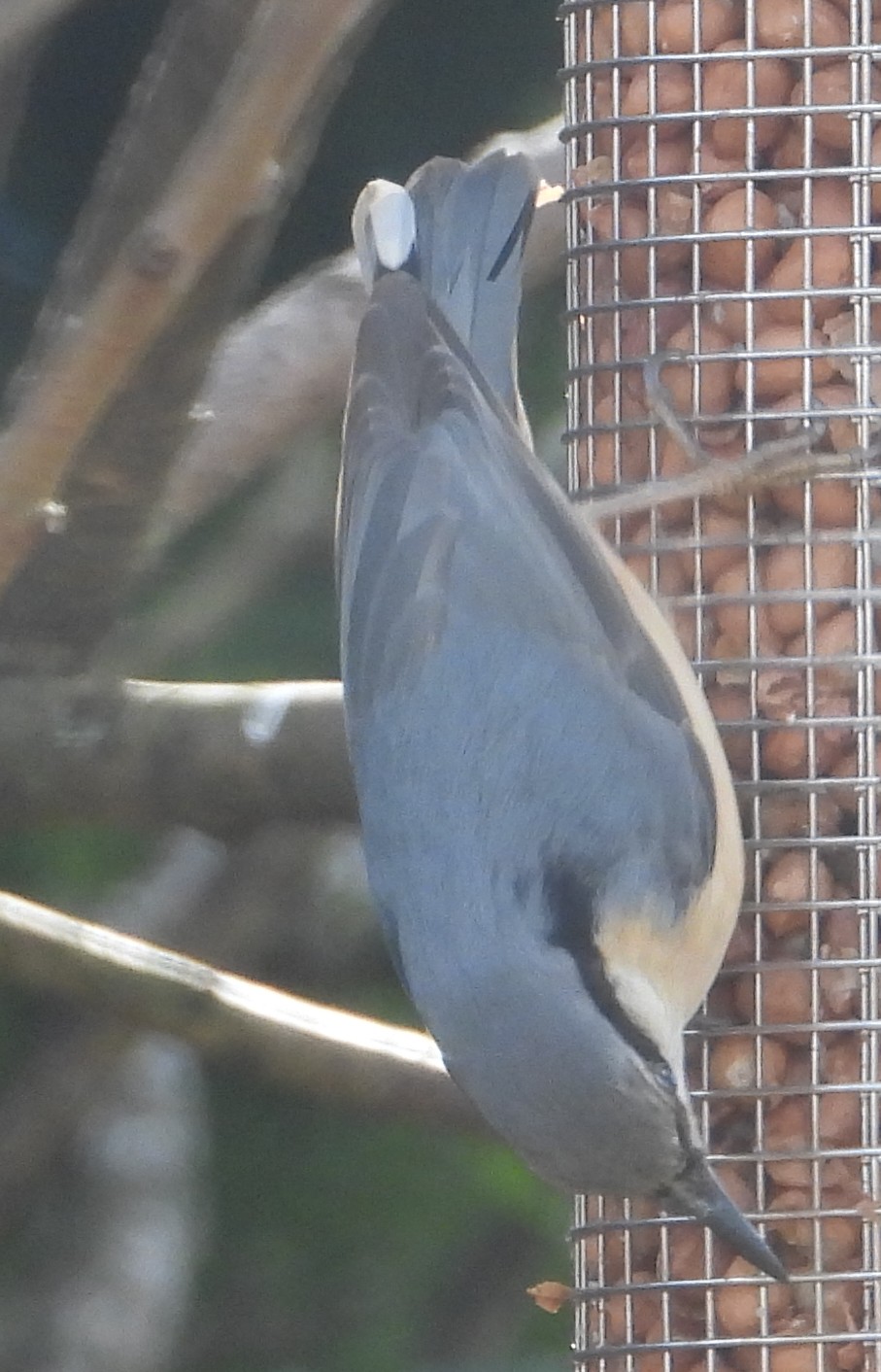
Here are a few photographs showing signs of spring in the garden, despite occasional sub-zero mornings still. Also the return of the Nuthatch, last seen here in November last year.


Leave a Reply