Volume 35, Number 7
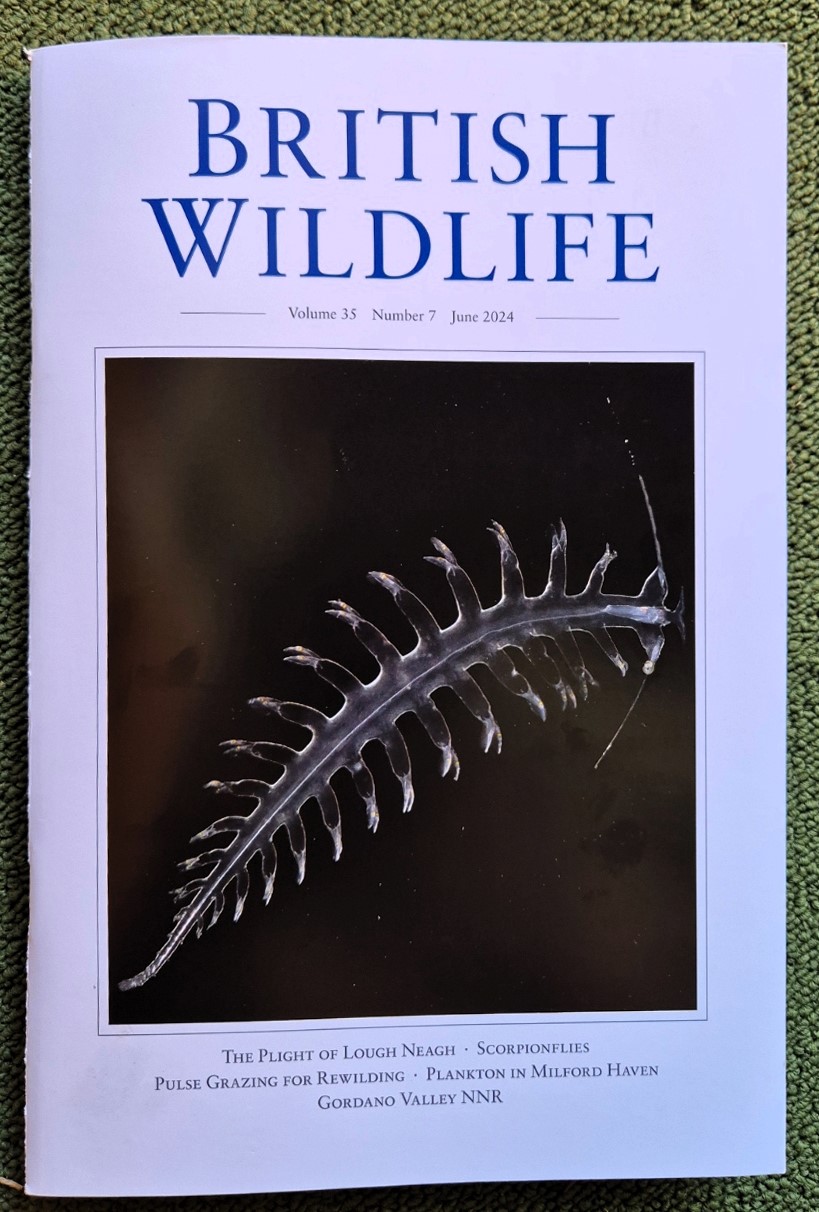
The striking cover this month shows a plankton, the polycheate Tomopteris, one of many superb photographs illustrating the article about marine plankton in Milford Haven.
The issue opens with an excellent but thoroughly depressing article by Tommy Greene about Lough Neagh. The plight of Lake Windermere has been well publicised, but that of this body of water less so in this country at least. It is huge, covering nearly 400 square kilometres. The problem is a toxic blanket of algae. The causes? Climate change has probably exacerbated it, but the usual suspects are to blame: two thirds of the nutrients giving rise to the bloom are from agricultural runoff from intensive farming, a quarter from sewage discharges. Is anything ever going to be done? This was once a wildlife haven, now people have become ill and dogs, swans and other animals have died from drinking the water. The number of migratory winter birds visiting dropped by 80% in just a decade, bitterns are down to a handful of breeding pairs and certain snail and insect species are down by 66%, and the fish no longer have enough to eat. Midge plumes have all but disappeared.
The agricultural industry and government were quick to blame the invasive Zebra mussel for all of this – they are always good at finding a scapegoat – but its being a major factor is not supported by science. The centre for studying the causes has now been closed down anyway, so there is insufficient data. The lough is, or, rather, has been, of great cultural and archaeological importance, not least in the poetry of Seamus Heaney. Private ownership of the lake’s bed by the Shaftesbury Estate, claimed in the nineteenth century, has not helped. The estate profits from wildfowl hunting and sand extraction, the latter happening on an industrial scale and entirely unregulated until 2021. Those regulations are suspected to be breached on a regular basis and the body responsible for enforcement is the Department of Infrastructure which has a vested interest since it is thought to be one of the biggest purchasers of the extracted sand. The owning family, the Ashley-Coopers, have repeatedly refused to disclose profits and how much is put back into in to protect it. Fines for slurry and sewage dumps have been derisory. One can only hope that increased publicity and the efforts of environmental campaigners will have some effect.
A thoughtful piece by Brett Westwood warns of the dangers of seeing the welcome proliferation of wild flowers on roadside verges as a panacea. The prettiest flowers are not necessarily the best for pollinators. Longer articles follow about underappreciated snow fleas and scorpion flies and the potential benefits of different types of grazing for wildlife. Amy-Jane Beer is unashamedly reduced to tears on the banks of the river Wye by it’s wounded, in many ways almost lifeless state.
Leave a Reply