Animal Wild
Simply enter your e-mail address above if you would like to be notified of new posts. Subscription is free (but please consider a donation to HART if you enjoy the content – visit hartwildlife.org.uk and click on Donate).
Photographs throughout the blog are mine unless stated otherwise.
Comments and feedback welcome.
January / February 2024
A new book

This is a sequel to Julian’s first book, Animal Trust, published in 2020, which was about his experiences volunteering at an animal rescue centre, Trindledown Farm in West Berkshire, part of the National Animal Welfare Trust, and other animal encounters. Animal Wild centres around his volunteering at HART wildlife rescue in Hampshire and will help raise funds for it.
Julian grew up in North London, graduated at Manchester University in English Language & Literature, and continues to be a fifth-generation antiquarian bookseller and a licensed auctioneer, having worked at Sotheby’s for eight years in the 1980s. His firm, Bertram Rota Ltd, founded by his grandfather in 1923 and which he joined in 1995, specialises in modern literature, architecture and the applied arts, and the manuscripts, letters and archives of authors and other luminaries, counting national libraries, major universities and other august institutions amongst its clients.
Julian is passionate about animal welfare, animal rights and the protection of wildlife and is often forthright in the expression of his views on those issues, seeing other animals as not so different from ourselves. He makes no secret of his anger and indignation at the destruction of wildlife and countryside by intensive farming, the badger cull, the shooting, building and water industries and others, and the sacrifice of the needs and concerns of individuals and majorities at the altar of corporate greed.
With anecdotes from his travels, wildlife photography trips and visits to other rescues and over 280 colour photographs, drawing on a wealth of information he has gathered over the last few years, Animal Wild is both a celebration of wildlife in the UK and around the world and a plea that we should be doing absolutely everything we can to respect, protect and preserve it.
£30 plus p&p
To order, simply send your address to julian.rota@hotmail.com or call Julian on 07808 328752 and we will send the book along with an invoice.
HART wildlife rescue – rescued animals in 2023, the numbers
HART has released its annual statistics. At HART in 2023 we took in an astonishing 3,615 wild animals for recovery and release. These included 31 bats, 669 hedgehogs, 40 foxes, 124 birds of prey (owls, buzzards, kestrels, sparrowhawks, red kites and one hobby), 45 deer, 9 badgers, 117 rabbits and hares, 5 weasels, stoats and polecats, 31 bats, 190 corvids (crows, magpies, jackdaws, rooks and ravens), 915 pigeons and doves, 917 garden birds, 272 ducks, geese, swans and herons, and 9 reptiles and amphibians.
Publishing Animal Wild
My second book, Animal Wild, arrived on a pallet at our house on December 18th, which should have been good timing for Christmas sales, but I was let down by the otherwise excellent printers/binders. They had said they couldn’t guarantee a date before Christmas but should have let me know in advance when it would be ready – they didn’t and so there was no time for the appropriate marketing. There have been modest sales already, but my thinking now is to hold back until at least the first signs of spring which is perhaps also when people will have had a chance to recover from the expense of the festivities.
Feedback has been lovely, especially from a couple who wrote to me about the blurb: “We so welcomed your email explaining without apology or qualification your views on animal rights, the environment and politics in general. We’ve been vegans and animal rights activists for 45 years … It’s so very refreshing to read someone, especially someone in business, who isn’t afraid of speaking out – even, presumably, at the risk of alienating some customers! Long may it be so! … all strength to your efforts to bring about a better world.”
I replied that their message alone was more than worth the risk of alienating some customers of our rare book business.
I offered to send a complimentary copy to Chris Packham, who wrote the foreword to Animal Trust and is a patron of HART, and was thrilled when he asked me to send it along.
Proof-reading is a subject I discuss in the book and I am rather OCD and perfectionist about it. Mistakes are infuriating. As often as not something one has written will fall open at a page where an error jumps out, even though it has been checked over and over again. With my first book, Animal Trust, I spotted two unclosed brackets more or less straight away but there is not, as far as I know, too much else. One of the beauties of publishing online, I suppose, is that it is easy to go back and change things, not possible with a printed book.
Book collectors can get very excited about errata slips – a list of corrections on a slip of paper inserted into the book (or “tipped-in”, i.e. attached by glue at the inner edge of the slip, usually amongst the preliminary or end pages or sometimes on the page where the error has occurred), especially since their presence or absence can be an indicator of the earliest appearance of the book in question.
In spite of Microsoft Word’s best autocorrect efforts (for example, changing RSPB and RSPCA to RPSB and RPSCA for some reason), and a narrowly avoided – at the last minute – repetition of a somewhat exaggerated story put out by the wonderful organisation Protect the Wild (see below) for which they were lambasted but quickly apologised, to date I am only aware of having misspelt the name of the nineteenth-century ornithologist and pioneer migration specialist John Cordeaux. I left off the ‘x’. And so Animal Wild has an erratum slip, loosely inserted in each copy at page 147. I don’t feel too bad about it, in fact it feels a little bit grand.
Research for Animal Wild consisted, in part, of saving and organising countless e-mails, Facebook and other posts and having done that on a more or less daily basis for three years it has been something of a relief not to be doing it for a while. But then something so good or so interesting comes along that I cannot resist keeping a record of it. I definitely have the writing ‘bug’ now and whilst wondering, “What next?”, hit upon the idea of this blog as a sort of addendum to or continuation of the book, updating and correcting where necessary.
Protect the Wild
This is Protect the Wild’s mission statement. “Our mission statement is to empower people to protect British wildlife. We do that through informing, supporting, and funding. Ultimately we want to end hunting and shooting in the UK. That means a focus on replacing the Hunting Act with our Hunting of Mammals Bill and closing down a bird shooting industry that not only slaughters millions of birds every year, but traps and snares countless mammals, and is underpinned by ongoing wildlife crime. It will take time, but we won’t give up or compromise. With your help we will protect the wild.”
Fox hunting – protest, sabotage and lies

I was delighted to see that the Royal National Lifeboat Institution (RNLI) had turned down the opportunity to receive funds from Ireland’s Dungarvan Foxhounds: “The RNLI reserves the right to decline donations that are not in keeping with the purpose and the values of the institution. We will not be accepting any donations from this activity or related activities, now or in the future.” Campaigners against bloodsports have had other similar successes. A spokesperson for the charity Pieta House commented: “We cannot be seen to have an association with or endorsement of bloodsports, and so we feel it would be inappropriate for us to benefit from or to be associated with a hunt. People across Ireland are so incredibly supportive of Pieta House, but in some cases – such as this one – the manner of the fundraiser is incompatible.” The Hope Foundation which works to help children in India also said “no thanks” to a fundraiser organised by a hunt in Cork.
Chesterfield Football Club was due to host a fundraiser for the Barlow Hunt, but fans, campaigners and activists quickly persuaded them to cancel it. The Marwell Hotel has cancelled a hunt ball and the manager has issued an apology: “I have come to realize, through the passionate feedback I have received, that I have unintentionally failed in this regard. I want to make it clear that I do not support any illegal activities, including those that cause unnecessary suffering to animals.”
Illegal hunting, evidence of fake or non-existent trail-laying, trespass, attacks on saboteurs and arrests have been continuing even just in the last few weeks. But Protect the Wild e-mailed a list of reasons why 2023 had in some ways been a good year for wildlife, including the ban on hunting with dogs in Scotland, the banning of snares in Wales (although the use of them is still sadly taking place) with Scotland set to follow, the quashing of a proposed badger cull in Northern Ireland, the downfall of the Avon Vale Hunt, raised awareness of stag hunting and an increase in hunting convictions. Other successes and happy news are related in Animal Wild, such as the collapse or merging of numerous hunts and the refusal of a number of major UK landowners to continue to allow grouse shooting on large tracts of land. Recent reports suggest that the Oakley Hunt will soon be no more – increasingly it seems, as the public turn their backs on them and express their disgust, they are, as businesses, simply no longer viable.
Northants Hunt Saboteurs however received a report that on February 19th the Pytchley Hunt lost control of its hounds (an extremely common occurrence) resulting in the deaths of one or more dogs on a busy A road. The Pytchley has form for this. It provokes the question what was the hunt doing anywhere near a busy road (or in at least two cases in 2022 a railway line) if it was genuinely following a laid trail? It is a stark reminder that the hounds are the forgotten victims of this barbaric pursuit: according to Protect the Wild around 15% per pack are killed by the hunts themselves, calculations which suggest between about 4,900 and 7,300 per year across 195 packs.
In Animal Wild I wrote at some length in particular about the Warwickshire Hunt and am now pleased to see that MP Matt Western has written to both the Home Secretary and the Chief Constable of Warwickshire Police. The politician has said he is “making clear my express concerns about the lack of transparency” around the policing of the Warwickshire Hunt.
Chris Packham said not so long ago that he tried to avoid using the word hate or even feeling that negative emotion, but that he did hate fox hunting. A report on Channel 4 news on January 25th showed blatant hunt criminality, specifically by the Blackmore & Sparkford Vale Hunt, which has actually led to their suspension by the ‘sport’s’ ‘governing body’, the British Hound Sports Association, itself merely a rebranding of its corrupt predecessor as a result of the smokescreen webinars scandal. They had to be seen to be doing something. But, it quickly turned out, not very much at all. The suspension of the Blackmore & Sparkford Vale lasted just three weeks, a token gesture. By February 13th they were back out in action again. Six men were interviewed by the police but as yet there have been no arrests. There were however convictions as a result of actions also shown in another section of footage, this the dragging out of a fox and throwing him or her to the hounds by the Avon Vale Hunt (already expelled by the governing body for another, similar crime). Senior police officers interviewed are unequivocal, talking of “blatant criminality” (“everybody knows this”), the smokescreens, the need to uphold the law or suffer the erosion of public trust and confidence in the police, and state that there are now efforts to co-ordinate national action on the matter, including sending police officers “back to the classroom”. One inspector makes precisely the point I made at the talk given by a Wildlife Crime Officer to our badger group, see below. This is without doubt a dying tradition but as the news reporter concludes, incidents like this just still keep on happening.
Raptor persecution and snares
Raptor Persecution UK, on February 2nd, using data from the RSPB and Natural England, published details of 122 Hen Harriers ‘missing’ or illegally killed in the UK since 2018, killings which are ten times more likely to occur over land managed for grouse shooting.
On 24th January an anti-snare campaigner and animal rescuer, Doug Maw, was found not guilty of all nine charges, including trap damage and snare theft, brought against him by the Duke of Norfolk. The reason was lack of evidence – could it be that the Duke did not want attention brought to the huge numbers of animals killed on his estate, which is inside a ‘national park’?
TV highlights – Puffins, musk oxen, Ruffs, Barn Owls and gorillas

During the first episode of Wild Scandinavia, a breath-taking nature documentary on BBC1, I took note of words spoken by an interviewee, scientist Tone Reiertsen who has been studying the marine ecosystem and bird life there for twenty years, in particular those worried-looking (and actually rather aggressive) birds, Puffins, which seemed to me to go to the heart of what Animal Wild is about. She was talking about climate change and its effects, in particular on migration patterns and behaviour. “We focus on they adapt and how capable they are of adapting. There is so little we know, we need to find out more. We are running out of time.”
Musk oxen also appear in the series, described as relics of the Ice Age, which is what they look like, seemingly almost impossibly massive, bulky and strong. Their population is gradually recovering following the stricter enforcement of hunting regulations. Ruffs too, wading birds whose appearance and behaviour, especially in the leks where the males display before mating, I can only describe, for want of a better phrase, as just plain weird. It was refreshing to enjoy a commentary which did not constantly rely on superlatives as many seem to do. Not every animal has to be the biggest, or smallest, or fastest of its kind …
In the year’s first episode of Winterwatch with Chris Packham et al., new, cutting edge research has shown the complex fluid dynamics relating to the highly specialised feather structure on the trailing edge of the wings of Barn Owls. This, it turns out, is what makes them able to fly almost completely silently. From an excellent webinar hosted by the Barn Owl Trust, I had written: “They evolved in warmer climes so don’t carry much fat and their feathers are not waterproof so they tend not to hunt in the rain.” This was the best supposition at the time, but the best science is always open to new evidence and ideas and the reason they tend not to hunt in the rain is now thought to be because if those special feathers are wet, dampened down, the silencing fluid dynamics simply don’t work.
I also enjoyed the BBC’s Silverback, which follows the attempts by wildlife cameraman Vianet Djenguet to help to habituate the alpha male of a group of highly endangered eastern lowland gorillas in the Democratic Republic of the Congo to human presence. The aim is to enable tourists to visit the family in relative safety, thereby raising money to help save the species.
Ducks and geese

In preparation for the busy season at HART when we take in hundreds of ducks, geese and songbirds, I have been reading Ducks and Geese by Marianne Taylor, part of the RSPB Spotlight series, Bloomsbury Wildlife, 2020. Much to learn. The heads of mallard drakes, for example, are not actually green because of pigmentation – the iridescent plumage has a microstructure that reflects different shades of light. “Feather condition, flexibility and waterproofing are maintained by the application of oil secreted from the uropygial gland at the upper base of the tail.” Wildfowl are one of only a few families of birds in which the males have an everted reproductive organ, a penis (for most birds it’s cloaca to cloaca). Ducks and geese also have special glands in their heads which extract excess salt from the blood which is then excreted from above the bill.
I was asked if I was missing my visits to nature reserves and rescues and the photographic opportunities they offer or whether I was going to give it a rest for a while. I admit I am not much of a cold weather person, but I am in fact missing it already and have RSPB Pulborough Brooks, RSPB Arne (Poole Harbour) and Tice’s Meadow (under threat from developers) and a second visit to Mane Chance Sanctuary, the horse rescue founded by Jenny Seagrove and which shares a volunteer with HART, on my list. Another visit to Slimbridge feels well overdue, and I’ll be going on a trip with Wildlife Worldwide to Norfolk in September when wader migration will be at its peak, hoping in particular to witness the spectacular gathering of Red Knots and other birds at high tide at RSPB Snettisham.
Pandering to my missing the Canada Goslings whom I watched grow from fledglings to adults at HART before their deeply moving release last year, and of whom I became extremely fond, I watched the film Fly Away Home (1996) for the umpteenth time. It’s a tear-jerker. The story was inspired by experiments with migrating birds carried out by Bill Lishman who trained orphaned Canada Geese to follow his microlight aircraft to guide them on their migratory path in 1986. It remains a good yarn, but watching it now, with perhaps a more educated or jaundiced eye, I kept coming back to the current thinking, little though we truly understand about migration, that knowing the direction in which to travel, and when, is somehow innate. The film though also makes a telling case against the destruction of wildlife by property developers and the actions of an animal regulation officer attempting to enforce the law which, like most law relating to wildlife is either badly written, deliberately vague, or based on profound ignorance, or all three.
Wildlife law
On the subject of wildlife law, I attended a general meeting of the badger surveying group (see below for the website) to which I belong for a talk and question and answer session with a newly-appointed Wildlife Crime Officer. He seemed a very decent guy with the best of intentions, but he was no match for the combined brain power and knowledge of the attendees, both with regard to wildlife and indeed the law. Some of the questions were … awkward. Why was it, I wondered, thinking in terms of what happens when the police are called to a clash between fox hunters and hunt saboteurs, that the latter, there to witness and record and often thereby prevent crime taking place, that is was they who were most likely to be arrested? The WCO asked why I thought it might be. I suggested that it might perhaps be to do with unjustified preconceptions about the saboteurs and the common involvement of members of the judiciary and senior police officers, and indeed some not so senior, with the hunts themselves.
binfieldbadgers.org.uk A very well-designed and highly informative website.
More geese and swans

We mostly don’t and are advised not to go down the slippery slope of naming animals taken into HART, but for reasons unknown, I came to think of this rescued gosling as Henry. He was the smallest of a group of five, but unquestionably their leader. He grew into an adult just like the one pictured below.

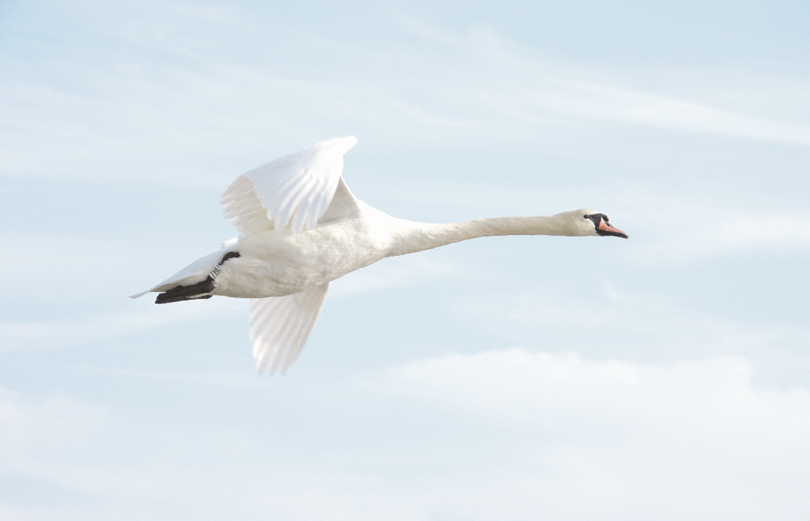
When I visited the Swannery at Abbotsbury in Dorset, described in Animal Wild and the last photographic journey I made before the book was published, in the presence of hundreds upon hundreds of swans and many other birds, perhaps surprisingly since so many seem to be fearful of swans, a profound sense of peace and well-being came over me. That feeling will be my reward, whilst continuing to play my very small part for wildlife at HART on Mondays in 2024.

I was particularly pleased with this photograph which serves as the frontispiece to Animal Wild, taken at Abbotsbury using a combination of a little bit of patience, a little bit of skill and a very great deal of luck.
The book also includes a sharp photograph of a cygnet shaking off water drops. I didn’t use the image below for obvious reasons, but this was not a camera malfunction. It looks as though I have applied a rotational geometric special effect, but in fact the cygnet was moving so fast that the camera just couldn’t keep up with it.

Garden birds and the RSPB
Meanwhile, the RSPB’s Big Garden Birdwatch took place between the 26th and 28th January this year. For the first time in decades and in spite of some misgivings about some of the ways in which they ‘manage’ nature for the benefit of birds, I have renewed my membership of the RSPB (Royal Society for the Protection of Birds). The flagship reserve, Minsmere in Suffolk, also written about at some length in Animal Wild, remains one of the most magical places I have been. At a minimum of £60, it seems very good value. I was impressed by the membership pack which included a newsletter/magazine (more demotic, with a different and wider audience perhaps than that of the British Trust for Ornithology (BTO), and two excellent books, see below, a well thought-out and designed guide to the reserves which now has a permanent place in my car and the RSPB bird identification handbook. I think the guides published by Collins are widely acknowledged as the best, with photographs, at least in the version which also resides in my car at all times, as opposed to drawings, which I think I prefer, although both have their merits of course. I have Collins guides in various editions and formats, including the phone app, also see below.
The RSPB magazine includes some surprising (to me) information about relatively common garden birds and reminds of the benefits of leaving parts of gardens wild, No Mow Until May. For example, male House Sparrows with the largest black patches are the most proficient fighters. The intensity of the yellow colouring on the breast of Blue Tits is likely related to their ability to catch worms since the carotenoids which reflect yellow come from the plant juices which the insects consume. Starlings include aromatic herbs in their nests which seem to make the chicks healthier. Wood Pigeons have an unusual eye structure which enables them to look down and around at the same time, they are the only native British bird to be able to suck up fluids rather than scooping them in and one of a very few birds which feed their young on milk produced in the crop.
I have a friend who works for the RSPB who gives me an inkling of just how much good work they do all over the UK. They were for example hugely influential in bringing about the closure of industrial sand eel fisheries, which were severely impacting seabirds, especially those such as Puffins, Razorbills and Kittiwakes.


I undertook my one-hour stint for the Garden Birdwatch. I was not optimistic that they would be reassuring. I recorded two Blue Tits, one Great Tit, two Robins, two male Blackbirds, one Wood Pigeon (who, I was reminded, call/coo five times as opposed to the three-part vocalisations of the Collared Dove), one Greenfinch, two House Sparrows and six Jackdaws. The numbers seemed paltry. At my parents’ suburban house where I grew up, I would have struggled accurately to count the number of House Sparrows who were a constant presence. I happened to notice a large number of Rooks (collectively known as a parliament) on Hungerford Common just a few miles away, and yet in my immediate vicinity, apart from the occasional Crow it is all Jackdaws and nothing but Jackdaws (a clattering). I wonder how these territories are decided.

The 12th February newsletter from Birdguides bristles with enthusiasm. The recording of a White-billed Diver in Essex is described as highly ‘twitchable’, there is detail about a fairly heated debate as to whether White-fronted Geese should be considered wild birds, the British Trust for Ornithology’s heronries census reveals “mixed fortunes” for the UK’s Herons and Egrets, and there’s news that dogs are to be banned altogether from part of a beach in Suffolk to protect Ringed Plovers. A survey of Hen Harriers in Ireland carried out in 2022 reveals a shocking decline in numbers, the worst of any national survey to date, showing just 85 pairs, a figure which suggests danger of extinction. The decline since the first such survey in 1998-2000 is a sobering 59%. The Welsh government, having spent £5m on land in order to expand the site for the Green Man Festival, has had to abandon its plans thanks to a pair of breeding ospreys. Unfortunate – but presumably land elsewhere can be found. There are also reports of unusual sightings and early spring appearances, primarily of wildfowl. And there’s much more.
British Wildlife magazine – a round-up
Rather belatedly, I find time to catch up on the December 2023 issue of British Wildlife magazine. Some of the science is quite beyond me but even then it sends me down some interesting mental byways.
Yew trees
The cover features a gorgeous Redwing in a yew tree and the first article is The natural and cultural history of Yew by experts Peter Thomas, Fred Hageneder and Chris Knapman. Before beginning to read it I dredged up what I remembered and thought I knew about yew trees which came from studying Shakespeare at school. In Richard II which I think was the first Shakespeare play I read, there is a reference to “double-fatal yew”. We were told that deadly and effective longbows were made of yew for its strength and flexibility, and that the tree was highly poisonous, hence its common presence in Christian churchyards to deter animals from entering. So “double-fatal”. Shakespeare associates the tree with death and foreboding elsewhere. One of the ingredients in the potion concocted by the Weird Sisters, or Three Witches, in Macbeth, is “slips of yew, silvered in the moon’s eclipse”.
The article in British Wildlife explains the irony. For most of human history the yew has been regarded as the tree of birth, or life, not death, in many cultures, not least in Nordic myth as the Yggdrasil, a word I happen to have come across once or twice as an answer to a clue in the cryptic crosswords to which I am addicted.
Yews are, furthermore, probably the oldest trees in Europe. The Forthingall Yew in Perthshire is in all likelihood some 2,000 years old (they are not easy to age accurately).
They are not as toxic as all that either. The poison is an alkaloid called taxin but it has just recently been shown to be absent from the wood itself, and although the seeds and leaves can kill humans and other animals, it is a very rare occurrence. Animals seem able to develop an immunity over time and some extracts from the tree have proven to be useful in treatments of cancer.
Two words (at least) in the article were entirely new to me. One is “aril”, the bright red seed covering which attracts and thereby nourishes a variety of birds and mammals. The other is “dioecious” (knowing it will perhaps prove useful in a crossword some day). Most plants fall into one of two categories, monoecious and dioecious. The yew into the latter, since the trees are either male or female. Monoecious plants, which are in the majority, produce both male and female flowers.
Just to complicate things, there is another category, polygamo-dioecious, those plants having either female and bisexual or male and bisexual flowers.
The definition of dioecious above is a simplification however. A single yew can carry both sexes since one branch can be a different sex from the rest of the tree and very occasionally both sexes can be seen on the same branch. To quote the article directly, “To make life interesting, occasionally a whole tree can change sex.” The authors conclude by expressing their concerns about the yew’s future, since it is in sharp decline owing to climate change, the extensive use of its wood and “worries about livestock-poisoning (paradoxically coupled with nonetheless intensive browsing)”.
It is something of a theme of Animal Wild and for me stimulating to the heart and mind when the best science, however incompletely I personally understand it, proves itself a great buster of myth.
Water birds, blackflies, salmon farming and politics
The article about yew does not mention Shakespeare but strangely, and I had not seen it before writing the above, the next main article mentions the Weird Sisters in its first paragraph. This one is about waterbirds and plant dispersal in Britain and the authors’ pioneering studies of the phenomenon. Another new word (there are a lot of them actually, this is a very science-based magazine) – seed dispersal by internal transport is technically known as endozoochory.
Other articles discuss coastal management to benefit wildlife, blackflies (of which there are 35 species native to Britain, a nuisance and spreaders of disease but of ecological importance nonetheless), and other rather recondite subjects. It occurs to me that ‘recondite’ is itself a pretty recondite word. There are also the usual wildlife reports on an astonishing range of plants and animals (including macro-moths for example), and conservation news. The compiler does not shy away from what some might see as political comment, such as news that the decision to allow badger culling in Northern Ireland was deemed unlawful following a challenge by Wild Justice and the Northern Ireland Badger Group, whilst the king’s speech gets very short shrift indeed and the not-fit-for-purpose Environment Agency is taken to task on two fronts. He also reveals that in Ireland there is not even any monitoring of the badger population, numbers therefore remaining entirely a matter of guesswork. Another writer makes the case that the imposition of a 10% Biodiversity Net Gain on developers in England does not go nearly far enough and in any case takes no account of energy and water usage, runoff or raw materials. In Northern Ireland again, the Audit Office has “launched a review of the government’s handling of claims that more than 100 farm planning applications had used fabricated soil samples to bypass planning regulations on the disposal of manure.”
There’s a reminder of the terrible ecological damage caused by industrial salmon farming which, whilst touted as a sustainable alternative, consumes more wild fish than it produces. Estimates are that it takes 2.5kg of wild fish to produce 1kg of farmed fish. The UK population of (wild) Atlantic Salmon was reclassified as Endangered at the end of 2023, and globally from Least Concern to Near Threatened.
Beastly
Almost finally there’s a brilliant piece by Keggie Carew – on reading it I immediately ordered a copy of her book, Beastly: A New History of Animals and Us, Canongate, 2023. I am sure I will learn a lot from it although strongly feel that in my case she will be preaching to the converted. There is no ‘us’ as far as I am concerned, but I am sure that is precisely her point. In terms of the relationships between humans and other animals, her thinking could not be more closely aligned with my own and she makes points that I repeatedly tried to make, no doubt less eloquently, both in Animal Wild and its predecessor, Animal Trust. How convenient for us to declare that other animals were devoid of sentience or consciousness, how much damage has been done by religions using certain animals as allegories for good and evil, how dare we “hang adjectives” on them which they cannot shake off (the deceitful fox for example), how dare we use the word “vermin” (pace Chris Packham): “In the same way that we dehumanise our human enemies before we ask our young men to kill them, we demean animals.” Like me, she has no truck with certain euphemisms, like “Control. Manage. Harvest” and asks why do we use ‘it’ and ‘what’ to refer to animals rather than ‘he’ or ‘she’ or ‘who’. I try very hard to do the latter at all times both in life and in my books. It isn’t always possible, or it can be just too grammatically or stylistically clumsy, but I think it’s hugely important at least to make the effort. Similarly, I tend to use standard pluralisations – lions, giraffes, elephants and so on. Those who use the singular noun when they mean multiple animals tend to be from the hunting and shooting fraternity. She clearly believes as strongly as I do that every animal is an individual and that we underestimate them constantly. She uses some delightful examples, such as the fact that horses can read human body language better than we can, that we would be completely incapable of building something as intricate as the nest of a Long-tailed Tit (which can contain “as many as 200-300 sprigs of moss, 600 spider cocoons 2,000 feathers and 3,000 flakes of lichen” according to Chris Harbard in Birdwatch magazine – see also further on in the blog). Like me she wonders how we ever arrived at the idea that animals were unaware, incapable of friendship, rationality, empathy, culture, and dare I add, love. ”We seem perpetually surprised when animals turn out to be smarter than we thought.”
Wildlife tv and background music
This is closely followed by a letter from Adrian Spalding in, in a way, similar vein, following an article by Jonathan Guthrie in a previous issue, which absolutely chimed with me. I wholeheartedly join him in his condemnation of the typical use of music in wildlife documentaries. The choices are based on our interpretations of animal behaviour: tinkly or warm and romantic for mating displays and courtship dances, bouncy and jolly for kangaroos and so on, all anthropomorphising and assigning moral values to certain species, where good is beautiful and ugly is bad. There was a great spoof letter in Viz magazine once, the puerile humour of which I have yet to evolve beyond, along these lines… Here’s Fluffy the dormouse, but oh no, here comes Nasty Bastard (I have toned this down a bit) the scorpion who wants to kill and eat him. Often I simply wish there was no music at all. For light relief and big laughs, I do recommend the best wildlife documentary parody I have ever seen – a short series by Snoop Dog, easily googled.
PETA
My PETA (People for the Ethical Treatment of Animals) Vanguard membership is due for renewal. It’s a chunk of money, but they do so much good in the world that I cannot not do it. As ever, they are quick to send warm thanks, with an attachment detailing the wonderful work they have been doing globally to help abused and suffering donkeys. There’s more through the letterbox and via e-mail (it’s pretty non-stop here). A list of just some of PETA’s achievements in 2023 includes persuading a number of universities not to use or to stop using the forced swim test where small animals are made to experience near drowning, supposedly to shed light on human mental health issues, Harvey Nichols returning to its no fur policy, Frasers Group including angora in its no fur policy, persuading a travel company to stop offering a tour to the Running of the Bulls festival in Spain, another to end its ties with facilities which hold orcas and dolphins captive for human entertainment, a luxury travel company to stop promoting camel rides worldwide, an insurance company to stop promoting the Grand National, retailers to drop Thai coconut products which are the result of abusive forced monkey labour, the card company Moonpig to stop depicting ‘cute’ breathing impaired dog breeds (such as French bulldogs), and opposing a proposed dairy megafarm in Spain. On top of all of that and more, they do so much by way of direct, hands-on help for animals in disaster and war zones and all over the world. They are again currently working hard to end the appalling Iditarod in Alaska, where hundred of dogs are forced to race nearly a thousand miles in terrible conditions and treated with great cruelty year-round. Their tactic is to persuade major corporate sponsors to withdraw, which they have done and are doing with significant success.
Following pressure from PETA, Hallmark has agreed to stop using demeaning images of chimpanzees on its cards, the last major greetings card company to do so. This may not seem a hugely significant victory in the scheme of things, but I would argue that such images help to perpetrate the perception that animal exploitation of this kind is acceptable. It is a stellar example of the sort of thing PETA does best, and it gets people thinking, and talking. In any case, those chimpanzee ‘smiles’ are actually grimaces of fear.
peta.org.uk
Sea Shepherd
A Facebook post reminds me of the existence of Sea Shepherd. I used to support and follow them closely. I think of them as a hardcore version of Greenpeace. They do not mess about and show extraordinary bravery in their direct actions, employing a fleet of very serious looking ships: “Sea Shepherd’s sole mission is to protect and conserve the world’s oceans and marine wildlife. We work to defend all marine wildlife, from whales and dolphins, to sharks and rays, to fish and krill, without exception.” We should all be grateful for their existence – the oceans are pretty much lawless. They are unafraid to intercept and take on pretty much anything – in January this year, for instance, six supertrawlers illegally fishing for krill in Antarctica.
Newsletter round-up
Wildlife Trust
There’s a newsletter from the Berkshire, Buckinghamshire & Oxfordshire Wildlife Trust. I don’t agree with everything they do, but I do agree with their bottom line, especially the Nature Recovery Fund, a new campaign to help support a “step-change” in their work to help bring wildlife back. I am less happy with the bird feed and feeder supplier they endorse, which promotes squirrel-proof and even larger bird proof feeders. Personally, I am quite happy for squirrels and in our case particularly Jackdaws to have their place at the table. There is plenty for the smaller birds too. BBOWT has definitely become more of a campaigning organisation though and they have always done a great deal to encourage and inspire interest in nature for children and teenagers. They manage 2,643 hectares of land (I can’t visualise a hectare, I am pre-decimal after all, that’s about 6,500 acres), have 85 nature reserves, carry out essential surveys (watercourses for water vole activity for example) and have responded to many planning applications, 96% of which were subsequently withdrawn, refused or amended with improved considerations for wildlife. Their membership is at an all-time high.
Hillside
There’s a letter from Hillside Animal Sanctuary in Norfolk too, one of a number of rescues I visited whilst writing Animal Wild and probably my favourite. It’s described in the book but this letter is specifically about a pony called Balinda who was born blind and has a permanent home there alongside hundreds of other animals. They write that society has become so performance driven that someone like Balinda might well have otherwise ended up in the slaughterhouse. But: “Our collective character is not formed by our decisions about the most beautiful, powerful or competent – it is shaped by the way we treat the weakest and neediest amongst us.” As Mahatma Gandhi said, “The greatness of a nation and its moral progress can be judged by the way its animals are treated.”

hillside.org.uk
Greenpeace, sewage and horse welfare
There’s the winter issue of tireless Greenpeace’s Connect magazine to absorb too (Greenpeace was, I think, the first such organisation I joined back in in the early 1980s) dealing in particular with the Global Plastic Treaty, making polluters pay, deep sea mining and the huge problem of protected places being flooded with toxic sewage.
To see where it’s happening near you, you can visit greenpeace.org.uk/sewage-map. It’s grim to see and probably taking place, as in my case, not very far away at all. Additionally there is regular news from World Horse Welfare. Their campaign to stop the exporting of horse abroad for slaughter began almost 100 years ago. The Bill is through the Commons and in the House of Lords, the closest we have ever been to a ban.
Animal transport
I also recently approached The Animal Team with a view to volunteering to transport both wild and domestic animals in need. HART is too far from me for it to make much sense some of the time. The petrol outlay can be greater than the cost of a taxi if the animal in need is closer to HART than to me. I’ll see what comes of it. I looked into carrying out home checks for them too but decided I would not feel comfortable with that. Of course the checks should be very thorough and certainly not virtual as has become the case at some rescues, even after the Covid lockdown, but taking photographs of every single room in someone’s house seemed a bit too intrusive to me.
Flooding at an animal rescue
Trindledown Farm, part of the National Animal Welfare Trust, where I volunteered for eight and a half years, has become flooded again in spite of the preventative measures for which I fought so hard on their behalf. They have also taken in two donkeys. All news which made me miss the place.
Waxwings
It has been a Waxwing winter, which does not occur terribly often. They come in numbers here some years, mostly likely due to a shortage of food and/or population growth in their breeding grounds in Scandinavia and Western Russia. I am not quite enough of a ‘twitcher’ to have jumped into my car to go and see them yet but I am very tempted. They are exceptionally striking and beautiful birds.
Spring has sprung
Now, there the early signs of spring. Snowdrops are out (it has been a few years since I visited Welford (where the Great British Bake-Off is filmed) to see the extraordinary blankets of snowdrops which flourish there. I took these pictures in 2018.


Badgers and a sett survey

January this year was just too wet and so it was in February that our badger group undertook its first survey of the year. We found a disused sett and an outlier fairly early on (we were out for five hours walking around five and a half miles – we stop to look at things and potter about a lot) but it was almost at the end of the day that we found the beautiful main and clearly very active sett. There was evidence of recent digging and one entrance was worn particularly smooth and there was bedding clearly visible and pawprints (below). The sett was first recorded as far as we knew in 2018 so it was good to think that it may have been in use ever since. It may of course have existed for decades or even centuries.


We also noticed hazel catkins (which I have since learnt are edible and nutritious, although bitter when raw) in abundance and lichens and fungi which I do not have the expertise correctly to identify.


What was particularly pleasing was the constant and varied birdsong. This probably indicates that weedkillers have not been used in the area. We often find on our walks that the woods and fields are eerily silent. We saw an astonishing variety of birds, not all of them by any means common. We are lucky that some of our group members are better at identification than I am: Robins, Blackbirds, Skylarks (a multitude, the males territorially singing their hearts out), Great Tits, Blue Tits, Long-tailed Tits, Buzzards (a pair displaying in courtship or renewal of an old bond and a third at a distance), Red Kites, Crows, a Raven, Bramblings (a first for me), Fieldfares, Song and Mistle or Missel Thrushes, and Chaffinches (heard).
A volunteer at HART asks if it is true that, as a friend has commented, badgers are primarily responsible for the decline in the hedgehog population. Two of us were quick to disagree. I wrote that badgers do sometimes predate hedgehogs and may compete with them for resources, it’s part of the natural order of things and they have to eat too, but the idea that they are primarily responsible for their decline is propaganda put out by the pro-cull government and farming industry. Since the cull has wiped out around half of our badger population (over 210,000 innocent animals), that should have resulted in an increase in the number of hedgehogs. They are mostly in decline for other reasons: huge numbers killed on the roads, the destruction of hedgerows, hedge flailing, vast monocultural fields created by big agriculture, the widespread use of pesticides and fertilisers on farms and in gardens (especially slug pellets in the latter), the building of new houses with impermeable garden fencing, over-tidy gardening practices, gardens lost to car parking and decking and artificial grass.
More fungi from our survey in November 2023, the first such a bright yellow that from a distance I thought it was a piece of discarded plastic, then tiny purple, and white with a seaweed-like appearance and … a stile to nowhere (answers on a postcard please).


The royal family and our foreshore (and more)
I recently came across by chance a piece of information previously unknown to me. Perhaps as is so often the justification for the royal family it is better than the alternative, but it is that more than half, 55% of the UK’s foreshore is owned by the Crown Estate. Other owners include the Duchys of Cornwall and Lancaster. The Estate also owns, apparently, almost all of the seabed around the UK from mean low water out to a twelve nautical mile limit. They also own exploitation rights (royalties from wind and wave power) purportedly worth £5 billion, granted by Tony Blair in 2004, for reasons best known, presumably, to him.
Our government the bee-killers
Unbelievably, our government, surely the most opposite of green imaginable, has approved the use of bee-killing pesticidal neonictinoids on sugar beet crops yet again. I cannot begin to fathom the thinking behind such a decision for I think the fourth year running. Surely it couldn’t be anything to do with the ultra powerful farming lobby and filthy lucre, could it? Described by the Wildlife Trusts as a “deathblow for wildlife”, it also disadvantages the one third of sugar beet farmers who choose not to use them.
More positively, Birdwatch magazine voted the wonderful Wild Justice as conservation hero of 2023, whilst awarding the government the Guano Award for Environmental Harm’.
Doves and signs
There is a cartoon on Facebook which moves me very much and which I share, showing a canary in a cage with the caption “And my wings … what will they be for?”
In Animal Wild I wrote a little about strange experiences which have occurred following the deaths of my parents and others close to me, always involving the appearance, sometimes in the most unlikely place, of, or interactions with, doves. I have heard of similar apparent coincidences (involving other animals) from a number of others. Attending the funeral of what must have been the last surviving and contemporary friend of my parents on February 1st, it felt very much to me that this was the final closing of an era. As on previous occasions, mostly but not always, I was neither expecting nor looking for another sign and indeed although I noticed at the time, the possible meaning of it did not filter through until several hours later. At the cemetery the small car park was completely full. In every other space I could find I would have been blocking a pathway. There was only one option which was to park immediately in front of a memorial which took the form of something like a small Zen garden. There, in stone, right by my car window, was a pair of doves.
A grounded Buzzard in Liverpool

My daughter is in touch with a photograph and short video of a grounded bird which had been around all day outside her hall of residence. The images were taken with a mobile phone so she had obviously been able to get pretty close to him. Her questions were what was the species and what might have been wrong with the bird? I had no immediate answers but my best guess was that he was a Buzzard, perhaps with concussion or similar. I turned to the wonderful resource of the combined knowledge and expertise of the HART community group on Whatsapp. Another volunteer also thought Buzzard. A bird of prey specialist (once a member of staff and still a volunteer) kindly stepped in. We hadn’t done too badly. Definitely a Buzzard, specifically a juvenile from last season, hence the lighter colour and stripes on the underparts. Juvenile birds are often very tricky to identify. Seagull species for example generally can be difficult to differentiate, the juveniles, for me at least, nigh on impossible. The best guess for the grounding was that the bird might have lost prey or been thrown to the ground by another bird and was trying to figure out what he was doing there. Perhaps, I thought, this might be known as WTF (Just Happened) Syndrome. Happily, he had disappeared by the end of the day.
Monkey experiments – a hidden danger
On a daily basis, every time I think I have put this first part of the blog to bed, something comes in. Today in the post it’s the winter issue of PETA Global magazine and the February issue of British Wildlife. With the latter, incidentally, if you subscribe to the digital version or, as I have done, print and digital, you get access to every single issue, published over three decades, a treasure trove I have yet to begin to explore. The stand-out story from PETA which I wasn’t already aware of by other means, is that of a potentially deadly, to humans, side-effect of the monkey importation pipeline. It is bad enough that monkeys are snatched from the wild to be shipped abroad to be used in cruel and pointless experiments in the first place. Also, though, many primates carry a latent form of TB. In the wild it remains asymptomatic thanks to their immune systems, but under the stress of capture and export, latent can become active and highly contagious to other monkeys and humans. We are dispersing TB and other diseases transmissible to humans around the world, all for absolutely no reason. Health regulators do not feel obligated to do very much, or anything, about it. Did we learn nothing from Covid? It would seem not.
Fox hunting – the shocking statistics
Before I had had a chance to turn again to British Wildlife, there’s an e-mail from Protect the Wild announcing the publication of a hugely significant and impactful report. The organisation’s Glen Black has spent six months compiling and consolidating all of the data and reports from the 2022/2023 hunting season (including the cubbing season), entitled Hunting: A Case for Change. Lest anyone doubts what has been and is actually going on ‘out there’, and surely very few still do, the figures are properly shocking. The report does not cover hare coursing, badger baiting, mink or otter hunting, but concentrates on the hunting of foxes, deer and hares with dogs. The information is gathered from reports not just by anti-hunt groups but also regular members of the public, local and national media. It is acknowledged in the report that the numbers can only ever be best estimates and approximate and that there are cases which are ambiguous, but I would counter that the saboteurs, in spite of their best efforts, cannot be everywhere, all the time, and so I think it is important to bear in mind that these figures only represent observed incidents, and also that they are for just the one season. The true figures are in all probability a great deal higher. The full, highly detailed report can be downloaded from Protect the Wild’s website, but here are the key numbers.
46% (i.e. 78) of registered so-called trail hunts were caught killing or chasing foxes.
88 deer were chased and 21 killed, 18 of those 21 intentionally by staghound packs, which were responsible for 31 of the chases.
There were at least 2,000 meets of hare hunting packs.
211 instances of hunt violence were perpetrated against anti-hunt activists and in some cases even unassociated members of the public. Of these 198 are classed as minor (relatively), 13 as major. Minor incidents include those where insufficient details were provided, or pushing, shoving, spitting, slashed tyres, successful and failed attempts to steal equipment and so on. Major attacks include hit-and-runs on people with vehicles, knocking down and trampling by horses, vehicle windows being smashed when people were inside and tools or weapons being used to attack people.
There were 599 reported cases of traffic offences, trespass, road havoc and other non-quarry based incidents (the majority of the last category relating to sett interference).
343 police vehicles attended hunting activities (not including attendance at Boxing Day parades). There is no way of separating out the costs involved but the West Kent Hunt Saboteurs state that a freedom of information request revealed that the cost of policing two Boxing Day parades alone was £16,401.
One third of observed hunt days by the notorious Blackmore and Sparkford Vale saw a fox chased or killed.
There were an estimated 15,180 hunt meets altogether.
Some 3,500-5,000 foxes are estimated to have been killed or chased by hunts registered to the Master of Foxhounds Association. This does not include unregistered hunts, nor those not regularly subject to observation, and so that is probably two thirds of the total.
60 hunts were reported as causing at least one incident of road havoc.
61 different hunts drew at least one report of badger sett interference.
The figures do suggest a downward trend overall, thanks to the folding and merging of hunts and the increasing effectiveness of sabbing, but that does not of course obviate the urgent need for better legislation, stronger enforcement and more punitive measures against these serial offenders, as one would imagine would be the case with any other kind of crime.
British Wildlife magazine – another issue, another round-up
Wrasse
Back to British Wildlife magazine now that that is off my chest and my blood has stopped boiling (more or less). The first article in this issue is The colourful lives and times of British and Irish wrasses by Frances Dipper. Fish are not a particular interest of mine, but it is still a fascinating read, revealing that whilst most fish are not ‘good parents’, simply gathering together and ‘letting everything go’ into the water, male wrasses build nests. There is a good deal about the difficulty of observing, recording and identifying fish generally, not helped by the fact that many species of wrasse change sex, some showing a concomitant colour change, others not (and the whole story is a lot more complicated than that). The major concern in terms of their conservation is the increasing exploitation of wrasse as cleaner fish in the salmon farming industry to help deal with the inevitable sea-lice infestations which plague it.
Ancient woodlands
Next up a discussion of the destruction of ancient woodlands, made worse from 1919 by the establishment of the Forestry Commission, whose methods continue to cause great damage to this day under the aegis of DEFRA (or DEATHRA as it is often referred to in nature and wildlife loving circles). The author, Ian D. Rotherham, blames corporate blindness and the constant search for the cheapest, not the best form of management. He concludes with a plea that we tread gently through these sacred places, and manage them sustainably as was the case, until around 1850, for thousands of years.
Rare flora, rewilding & restoration
Other articles deal with rare flora and the potential positive effects of rewilding on freshwater wetland restoration. It is clear that our freshwater systems are in crisis. What is puzzling (or all too predictable) is that government does not or will not listen to the science and act to protect our most fundamental natural resources – soil and water.
Simon Barnes is angry
Simon Barnes is a writer I have long admired and he does not disappoint in a typically well-written and witty but also angry piece, in which he talks about the increasing tendency of the right-wing to turn against the green agenda. Rishi Sunak offering new licences (legal challenges are in place or in the wings) for oil and gas exploration for example (he also imposed an increase on airline passenger duty, which might seem like a beneficial environmental tax, until one reads on to discover that the additional levy will not apply to private jets). It is as though our current government cannot believe what they have got away with and then sit around dreaming up the next most disgraceful and self-interested initiatives they can imagine. It isn’t just the UK of course. Barnes mischievously agrees with Trump telling us that we don’t have to worry about climate change. “It’s our grandchildren who’ll do the worrying.” At last year’s Conservative party conference net zero advocates were suddenly ‘zealots’ and the enemy. Businesses and politicians are essentially only interested in short-term gain. But why do ordinary people go along with it? Sunak expressed his concern that “hard-working British people” (to my mind a phrase that always sends out a loud bullshit alert) should not suffer “unacceptable costs” of environmental measures. The irony is off the scale and as Barnes says, the implication is that “only layabouts have a vested interest in the future of the planet … The rejection of green ideas … has become a crucial part of the whole package of downright, no-nonsense, get-on-with-it, down-to-earth, send-’em-to Rwanda, cut-taxation, proud-island-race, persecute-the-desperate, anti-woke and to hell with the bleeding-heart liberal elite ideals that appeal to a certain kind of mind.” Witty and angry indeed. Dog-whistle catchphrases (“Stop the Boats”) and the creation of bogey-figures are all part of it.
Eco-anxiety
The entire issue, it seems to me, often has a stronger tone of righteous anger than I have noticed previously. Contributor Pádraic Fogarty in particular is not one to mince his words. It seems to me there is an ever-growing sense of urgency amongst those who care, particularly the younger generation, more than a few of whom have told me that they think about little other than climate change, suffer from terrible eco-anxiety and in some cases have no wish to bring children into the world to avoid putting yet more stress on Gaia, our one and only home planet. In my student days the very real existential threat was all-out nuclear war, which I think was a constant lurking presence in the backs of our minds at least in much the same way. Now, we know what we have to do, the sense of frustration that we are not doing it, for all the worst reasons, can be completely overwhelming. It is, I think and hope, still a terrible but soluble problem. The watchdog that is the Office for Environmental Protection has warned that the UK government is “largely off track” on eight out of its ten environmental goals, particularly in relation to farming. There is no anti-farmer rant – big agri-business aside, farmers need more help and better financial incentives to maintain natural habitats. We just do not have time for these constant delays, back-trackings, and reneging entirely. It is not just the right wing – Keir Starmer has been frantically doing much the same. Rewilding has been shown to significantly reduce localised run-off and flooding, but governments and their agencies persist, for fear of upsetting certain parts of the farming sector, in refusing to acknowledge the benefits of restoring ecosystems to the point where nature can once again take care of itself. It is almost a mantra for me: wherever possible or even conceivable, just leave wildlife alone.
There are so many depressing statistics. Only recently revealed, £1.8bn of public money was has been spent over the last ten years subsidising fuel costs for the UK fishing fleet, most of which is used by bottom trawling vessels. 2023 was the worst year yet for Hen Harrier persecution and as usual the wildlife crime report does not make for happy reading. Full details are available on the British Wildlife website.
Beaver bombing & badger poo
In counterbalance, a glittering review of Black Ops & Beaver Bombing: Adventures with Britain’s Wild Mammals by Fiona Mathews and Tim Kendall, Oneworld Publications, 2023, reminds nature writers of the importance of humour in their work (which I attempt with, I hope, some success) to help engage a wider audience. I have not been able to resist ordering a copy. There will be more on this book in the Books Old & New posts. The reviewer, Peter Cooper, observes that mammals in the UK take something of a back seat when it comes to conservation and public enjoyment. There is not much diversity following the wiping out of apex (‘box-office’) species and mammals here tend to be shy and difficult to observe in detail. He reminds me of nothing so much as our badger group when he writes that the world of British mammal enthusiasts is one “patrolled by odd sorts prepared to wait long evenings sat still on the chance of a glimpse of something nocturnal, or have their day made by the discovery of some especially curvy faeces or a slightly indeterminate pawprint.” The excitement of one of our members when we come across a single badger hair on a strand of barbed wire and the enthusiasm with which he examines the contents of a badger latrine are almost palpable. No wonder the son of one our members refers to us as the ‘Badger Weirdos’.
Sewage
In the wake of the powerful Clean It Up campaign waged by The Times newspaper, there’s an expose of just how toothless and uninterested/self-interested the relevant regulatory body, the Environment Agency, really is. Pollution instances initially recorded as serious (category 1 or 2) were routinely downgraded to category 4, i.e. having no impact at all, by the agency. Just a few? No, 2,350 between 2022 and 2023. Often the incidents were not even visited by agency personnel. In six cases the downgrades were made because there were “no reputational issues” to the EA because there was “no public, political or media interest”. So much for impartiality, social and environmental responsibility and science. The government seems happy to sit back and watch while, as Shadow Environment Secretary Steve Reed put it, “stinking, toxic sewage pollutes our waterways.” Meanwhile, he continued, “The water bosses responsible are lining their pockets with millions in bonuses whole consumers are left to foot the bill.” If our bill from Thames Water is typical, prices are up by almost 25% on last year. And that’s not all. The government may be doing nothing (indeed not so long ago they voted against the idea that the water companies should at least be encouraged to do better), but some individuals, beachgoers, wild swimmers, anglers and sailors are taking action, pursuing the water companies in court. In what was no doubt a typically sinister and cynical response, South West Water offered to settle one claim out of court, as long as the plaintiff signed a non-disclosure agreement.
Two disappointing visits to nature reserves
It is not my intention to knock either of these reserves, nor am I in any way saying that they are not worth visiting. It is just that on these occasions they happened not to fit my particular aims. In both cases staff were extremely helpful and I am sure they serve their purposes well for others and will do at other times for me too.
Thatcham Nature Discovery Centre, BBOWT
With our children more or less grown-up, I had neglected to factor in that my visit coincided with half-term, so the centre was extremely busy. There’s a playground by the centre building which we used to use pretty often and then take a stroll or cycle round the lake. I had hoped to venture further, beyond the lake and into the reedbeds to spend some time in a hide away from the crowd. It transpired that the hide no longer existed. It was burnt to the ground by arsonists during lockdown. There was much to be depressed about during that terrible period, the littering and spoiling of nature reserves not the least of it. I cannot begin to imagine the motivation. Hating wildlife is common enough amongst those who pursue country sports, big agriculture and government, but surely this couldn’t be an expression of fear and loathing of ornithologists? Perhaps it was, or perhaps the perpetrators did it because they were bored and because they could. For photography the light wasn’t great either, but I did at least manage these male and female Tufted Ducks and a juvenile Black-headed Gull – one of those confusingly named species, even the adults showing partially brown, not black heads.


Pagham Harbour Local Nature Reserve, RSPB
There were plenty of garden birds about and the place is I am sure wonderful to walk around, indeed I remember it fondly from my childhood, but there were no water birds about at all, at least not on the Ferry Pool which was why I had turned up. I should have done my research and timed my visit with high tide, which is when the birds come inland. There is a snag with the Ferry Pool hide though, and it’s a big one, surprisingly only mentioned by one Tripadvisor reviewer. The hide and the pool are separated by an extremely busy main road. I am afraid I just can’t see the point of building the hide there. Not only was there a great deal of constant traffic noise, but, of course, seeing the birds, let alone photographing them, even if they had been present, would have been not far short of impossible, the view blocked every few seconds by passing lorries. I found the whole experience rather odd.
Back to the garden
There seem to be have been very few ducks for some time on the Kennet & Avon Canal which runs through our village. An impromptu conversation with a barge resident in the village shop told me something I didn’t know – otters eat ducks, and perhaps they are doing rather well on that stretch of water. I was also told that that would be in spite of the best efforts of some local fisherman who leave out fish laced with poison to try to eradicate them.


So, I set my camera up in my shed for a couple of hours one Saturday morning. The smaller birds quickly forget I’m there, but as usual my hopes of getting a decent picture of a Jackdaw, of which we have a healthy local population, were dashed – being corvids, they are just too clever and are all too aware of my presence (I will keep trying though). The pictures above obviously show a Robin and a Blue Tit, but the other residents were a bit of a puzzle. My initial thought from a distance was that they were Sparrows, but the markings were quite different and these were clearly ground-feeding birds. Because I had never seen them in the garden before, it took me a while to work out that this was a pair of Dunnocks. I was (disproportionately?) excited. Although Amber listed, they are widespread and far from uncommon. I have seen them before, including rescued fledglings at HART, but having seen them like this, I will always be able to identify them from now on. They are often mistaken for sparrows and indeed are also known as Hedge Sparrows, although that name has largely fallen into disuse since it is taxonomically inaccurate. This pair utterly charmed me.


Birdwatch magazine round-up
Issue 381 but my first – yet another subscription.
Red Kites


A short celebration of one of the most successful reintroductions. A rare bird in the UK just a few decades ago, and in the early twentieth century completely eradicated in England, Scotland and Ireland, in July 1990 birds from Wales (2) and Spain (11) were released on the border between Buckinghamshire and Oxfordshire. Now there are an estimated 4,400 breeding pairs in the UK. There’s a twist in that birds born here are now being translocated to Spain in an effort to restore the dwindling population there. I took the pictures above at the Kite feeding station at Gigrin in Wales. There’s some interesting artwork at and around the site too:


Twitching
The sighting of a Northern Waterthrush in Essex rather delightfully has one contributor reporting adrenaline levels “through the roof”, an intense case of the shakes and a sleepless night. The local Whatsapp group went into “meltdown” and more than 2,000 people turned up to see the bird for themselves. The appearance of a vagrant White-winged Scoter, a Pied-billed Grebe and a Bufflehead caused similar excitement in Scotland, likewise that of a Baikal Teal amongst the waterbirds of the Somerset Levels. If it sounds as though I know what I am talking about, I don’t. I had never heard of any of these birds, or indeed most of the other unusual and unusually early sightings recorded. In spite of what my family might say, I don’t think of myself as a twitcher. Of course I am excited to see a bird I have never seen before and more so to see a truly rare one, but I can be just as mesmerised by a Blackbird or a Starling. But I love the idea of twitching and that an influx of its adherents can make national headlines.
UPDATE. I hope the above comes across as the gentle teasing of the contributor which it is meant to be. I can hardly talk when I have posted about how ridiculously excited I was by the first appearance of Collared Doves (https://animalwild.blog/2024/04/15/garden-birds-ii-april-2024/), let alone the muntjac deer (https://animalwild.blog/2024/04/18/an-unexpected-garden-visitor/), in the garden this year.
Swifts
An impassioned article by Hannah Bourne-Taylor describing her campaign to attempt to reverse the trend of a UK population in freefall by adding a mandatory requirement to include swift bricks (so that they have somewhere to nest) to Building Regulations – not complicated, not expensive and not controversial and already a legislative requirement in, for example, the Netherlands. She garnered the requisite 100,000+ signatures to trigger a parliamentary debate but fifteen months later she is still having to fight what she describes as “extraordinary resistance” from the government and the building industry. It is sadly reminiscent of the resistance to hedgehog holes in garden fences – see Animal Wild. One of the absurd and spurious reasons given by West Berkshire Council was not that they were in any way in thrall to the building lobby, but that neighbours might simply block them up. How ludicrous, I thought at the time. Who would do that, who would be as perverse and unkind as to deliberately nullify such a small and well-meaning effort to help our wildlife? No one, surely? Our new neighbours, as it turned out, who did exactly that, not once, but twice. Sadly, for that reason, I had to decline when offered the chance to rehome a hedgehog in our garden by HART.
Feeding garden birds

Mark Avery writes as eloquently as usual. He wonders if there should not be more scrutiny applied to the admirably motivated and rather British habit of hanging out feeders in our gardens. Personally I would hate not to do it, but do take on board that we may in the process be allowing certain species to outcompete others and that if we don’t clean the feeders regularly, we may be helping to spread disease.
Taxonomy
A long and detailed article explores the complexities of arriving at a full and accurate list of British bird species. Technology in the form of sonograms (from apps such as Merlin), digital photography and genome sequencing means that we can form a far truer picture these days, but where a species begins and ends can be difficult to decide and controversial, leading to splitting, defining a separate species, and lumping (together) which reduces the total. For the record, the British Ornithologists’ Union’s list stood at 633 species at the end of 2023.
Seabird migration
Bird migration is another subject of which I have a very limited understanding and so Dr Joanne Morten’s article is very enlightening. In the eighteenth century it was pretty much a complete mystery – where did all the birds go? It is no simple matter and not just about birds breeding in the north and flying south for winter. Some migrations go the other way, others for example are longitudinal or altitudinal.
The oceans are lawless and can be inhospitable places where we have little idea of what goes on, but seabirds are perfectly adapted to it. Gannets, like this one in Northumberland, can reach speeds of around 60 mph as they dive into the water for prey.

The numbers are extraordinary. Dr Morten cites the examples of the Sooty Shearwater which flies around 600 miles a day, and the Arctic Tern (below) which flies some 44,000 (or even over 60,000 according to this article) miles a year “from high latitudes in the Northern Hemisphere to the Southern Ocean and back again”, making its migratory route the longest of any animal on the planet.

She does not ignore the fact that seabirds are in trouble – 56% of species in decline globally and one in three species threatened, primarily due to invasive species, conflict with fisheries and climate change. Bycatch results in the deaths of tens of thousands of birds every year, especially of Albatrosses and Stormy Petrels. There are ways to greatly mitigate this but as ever when it comes to wildlife, regulation and enforcement are hugely difficult.
Hence the importance of the work being carried out by BirdLife International and specifically the tracking database, http://www.seabirdtracking.org. Thanks to that, six major “Marine Flyways” have been identified, paving the way for co-ordinated, collaborative international efforts to successfully conserve “one of the most threatened animals on earth.”
Pipits
Field ID Notes by Josh Jones explains the differences, with plenty of illustrations between the various species, Meadow Pipits being the most widespread, less so Rock and Water Pipits. To the untrained eye, like mine, they seem very tricky to differentiate from one another. They are all gorgeous little birds though. This is (I hope) a Meadow Pipit I saw on Lindisfarne.

Personal tech
There are a lot of advertisements in the magazine for binoculars and spotting / scanning scopes. I do have a cheap pair of the former but rarely find myself using them – I preferred to splash out on a camera with such a ridiculous zoom capacity so that I find I really don’t need to. Now though, there is a review of the world’s first ‘smart’ binoculars by Swarovski, which incorporate a bird identification ability, although the reviewer reports that like the Merlin app on which it depends, it is by no means always accurate. I can see the appeal but won’t be spending £3,820 on the AX Visio any time soon. Instead I will continue to take photographs and identify by app or, how very old-fashioned, a printed book, there and then, or I may even wait until I get home. In the magazine’s final article. Lucy McRobert also writes about this latest development, describing the price as “buttock-clenching”. Not just me then. As with most AI technology, this is a controversial step, not necessarily in a forwards direction. As well as the possibility of misidentification and even AI forgery, as she points out, it would be possible to use these binoculars with your eyes closed. Why, she wonders, go out at all, let alone use your own eyes and brain?
There are even AI bird feeders now with a built-in camera and identification software. I think, again, I’ll stick with using my own eyes and from time to time a regular trailcam, rather than spending a fairly hefty three-figure sum and then having to pay a subscription for the identification element.
There’s also a piece about various types of camera shutters which is entirely beyond me and even a review of a pair of boots, also, at £275, way out of my comfort zone – comfortable though I am sure they are.
Birdbrain
According to Collins, “a foolish or unintelligent person”. A nice bit of myth-busting (I enthuse about this above) by Chris Harbard who reminds us that size isn’t everything and nor is human perception. Birds’ brains are actually more efficient than our own in terms of neuron density and energy use. Corvids and Parrots are the most intelligent birds not just because their brains are relatively large (that of a Macaw nearly five times that of a Pheasant) but because the density of neurons is so high. The hummingbird is a small creature but their brains make up a surprising 4.2% of their weight. They need this to cope with multi-directional flight and split-second decision-making. A large hippocampus enables them to remember which flowers it has visited and when to return to them.
Humpback whales and a Second World War bomb
Two unconnected stories in The Times on February 24th: the first announces the arrival of 300 people near Falmouth in Cornwall to witness the spectacular appearance of three humpback whales. Two pages further in there’s news of residents in Plymouth being told to evacuate their homes so that a recently uncovered, unexploded, half-tonne Luftwaffe bomb could be moved through the streets so that it could be taken out to sea and “detonated safely”. I am not saying I would have had another solution, but do feel this typifies our attitude to the oceans as dumping grounds. Does the safety of marine life not count?
Early Spring
The concern, as if there were not enough going on in the world to worry about, is that spring has come very early again this year, which carries with it dangers to wildlife. Nevertheless, a couple of signs from the garden do uplift the spirit. I planted this bush so long ago that I can no longer remember what it is, but these tiny, gorgeously coloured flowers, whilst short-lived, are always the first to appear and they appear in their thousands.

And this humble daffodil strikes me as so full of potent fecundity that it perhaps should have a PG rating. It makes me think of the NSFW poem The Geranium by Richard Brinsley Sheridan (1751-1816) – The Geranium by Richard Brinsley Sheridan | Poetry Foundation.

Leave a Reply