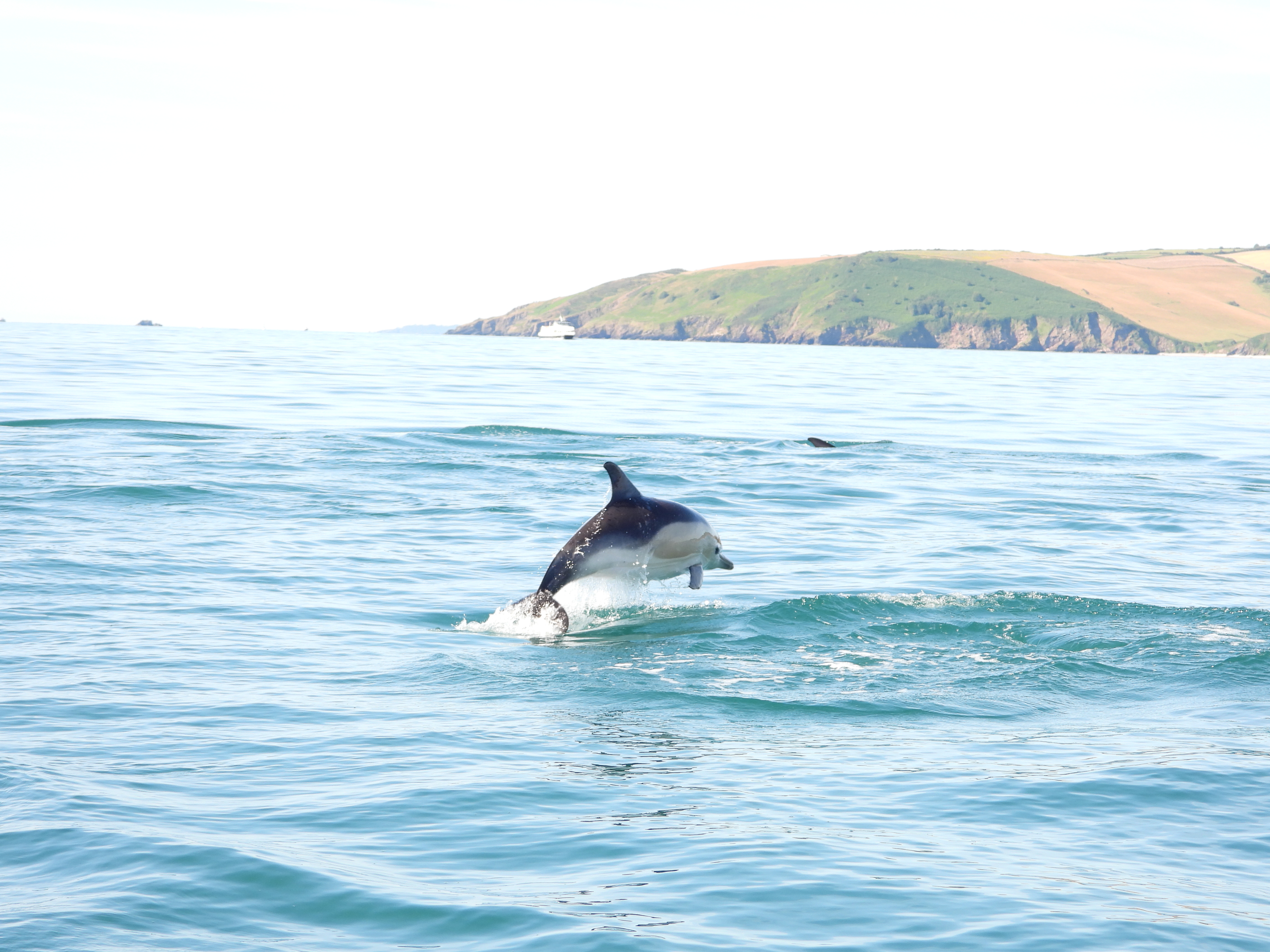
Dolphins have been especially close to my heart for years for all sorts of reasons, including personal ones, and not least because of their sheer grace and power. So the boat trip in the hope of seeing even just one was always going to be the highlight of the trip for me.
Firstly though a brief aside on a newspaper article which caught my eye yesterday. It’s the sort of thing which makes my blood boil. It is hard to imagine a more wholesome and harmless pursuit than paddleboarding. And yet two paddleboarders on the River Medway in Kent were stopped by Environment Agency officials and police officers and warned that in future they could be fined up to £1,000 for not having a licence. If they had been disturbing wildlife (there is no suggestion that they were) that would be another matter entirely, but the police? To use an old cliché have they really not got anything better or more important to be doing? The two friends were photographed (which seems an outrageous invasion of privacy) and advised to join Paddle UK, the sport’s governing body, which includes a waterways licence in its annual fee of £65. Why should they? How very, infuriatingly English to tie them up in bureaucratic knots like this. Our rivers should be free for all to enjoy.
As Amy-Jane Beer points out in her wonderful book The Flow, reviewed elsewhere in this blog, if you travel on or swim in 97% of waterways in England without permission, you will be trespassing. On her British Canoeing licence she continues, “I was about to learn that this official looking piece of paper gave me a right to paddle on less than 3 per cent of English rivers. Large, flat ones mainly, plus tidal waters. Even a few months into the sport I knew there wasn’t a great deal of white water in such places. Which begged the question, what was the point in having a licence at all? … Little by little, like so many others, we lost faith in the ability of the BCU, or British Canoeing as it became, to ever get a breakthrough because the landowning and angling lobbies were never serious about giving up control and these are people with friends in high places – indeed many large riparian landowners sit in Parliament.”
The day did not get off to a brilliant start, apart from my enjoyment of the Swallows and House Martins nesting in the eaves above my balcony. Breakfast was supposed to be available from 6.30 am and Mike had carefully timed everything so that we would arrive at the boat in Teignmouth at 7.30. We all dutifully appeared at 6.30 but there was nothing on offer and food and drinks did not begin to appear until 6.45. We ended up eating next to nothing (I did not even have a chance to finish my coffee) before it was beyond time to go.
Breakfast on other days were pretty terrible anyway. Awful hotel bread, boiled eggs not an option and so on. And then there was the ‘conveyor’ toaster. I had already moaned about that bane of hotel buffet meals – usually bread going through once is not browned enough, twice and it’s charcoal. This example took things to another level – even three passes resulted in just slightly warmed up, floppy bread. So why do hotels have them? They first appeared in the 1920s and were mass-produced mid twentieth century. They were never designed to make good toast (it will inevitably be dried out), it was all about throughput and longevity – a standard pop-up toaster’s element would never take the strain. The control dial does not alter the amount of heat, it adjusts the speed at which the bread passes through. Not that difficult to get right surely? I felt for the waitress who was struggling under difficult circumstances but when I ordered a poached egg and toast I had to insist that she sorted the latter out for me. I wasn’t going to stand and wait for three or more passes with no idea when the egg would materialise. The morning meals were without doubt the hotel’s biggest failing.
Eventually we clambered aboard the minibus, a black, oddly and off-puttingly named Renault Trafic, surely the boxiest, ugliest of its kind, but when we got to Teignmouth all of this was quickly forgotten. The boat was a fairly large and comfortable, fast, red RIB and captain Rob was very welcoming. He took us out for considerably longer than he was obliged to and was a fount of knowledge throughout, whether of local history, dolphins and other wildlife, or geology. He clearly knew the waters better than the back of his hand. He scanned constantly – we all did, but he knew best where to look and had the best binoculars for the job. In particular he was looking for birds feeding in numbers, implying the presence of fish and so dolphins too.
When he said “I see fins”, my heart skipped a beat, or perhaps several.
The water was almost as flat and calm as the proverbial millpond or like mercury as Mike put it, and we saw plenty of seabirds as we toured Babbacombe and Tor Bays, going on far enough to see Torquay, Torbay, Paignton and Brixham, the busiest fishing port in England, on the distant coastline.

There were Great Black-backed and Herring Gulls, Gannets, Shags, Cormorants and Kittiwakes, Manx and Balearic Shearwaters. Mike was extremely excited about the last of these, they are not a common sight. Also a Mediterranean Gull, which I had never seen before.
Cormorants and Shags with, in order a Great Black-backed and a Herring Gull:


Mediterranean Gull:

Then it was dolphin time. We were not lucky enough to see Risso’s Dolphins who are sometimes found in the area but boy did we see Short-beaked Common Dolphins, Delphinus delphis. Apparently a good rule of thumb is to estimate numbers by multiplying the number at the surface by three. By that reckoning we saw two pods, one of around twenty and the other sixty individuals.
They are generally and very roughly two thirds the length and half the weight of Bottlenose Dolphins, the only kind I had seen before. I don’t have the words to describe how magical the sight and sounds were and so I will let the photographs and videos do it (although I am not sure where to start and stop). It seems worth repeating the photo at the head of the post with the two that immediately followed it.


The rest show them having fun, riding our bow wave, appearing suddenly from the depths and diving under the boat.


I loved that Mike stopped the boat altogether so that two of them who were particularly obsessed with our bow wave did not get separated from their pod.
Incidentally, this tiny Cinnabar Moth Caterpillar just appeared on the back of my hand as I was typing.

Then it was back to the coastline for geology and more birds.


The green is copper leaching through the sandstone.


Life always seems to find a way in the toughest of conditions.


We saw a Peregrine Falcon on her nest, Fulmars on theirs, and these are Rock Pipits, so well camouflaged that you have to zoom in hard to see them. I only realised we were looking at two of them when I got home.


We disembarked (sea legs syndrome for me) and went for a coffee, trying to absorb the spellbinding exhilaration of it all, in my case failing. It seemed like a dream and it still does..

Leave a Reply