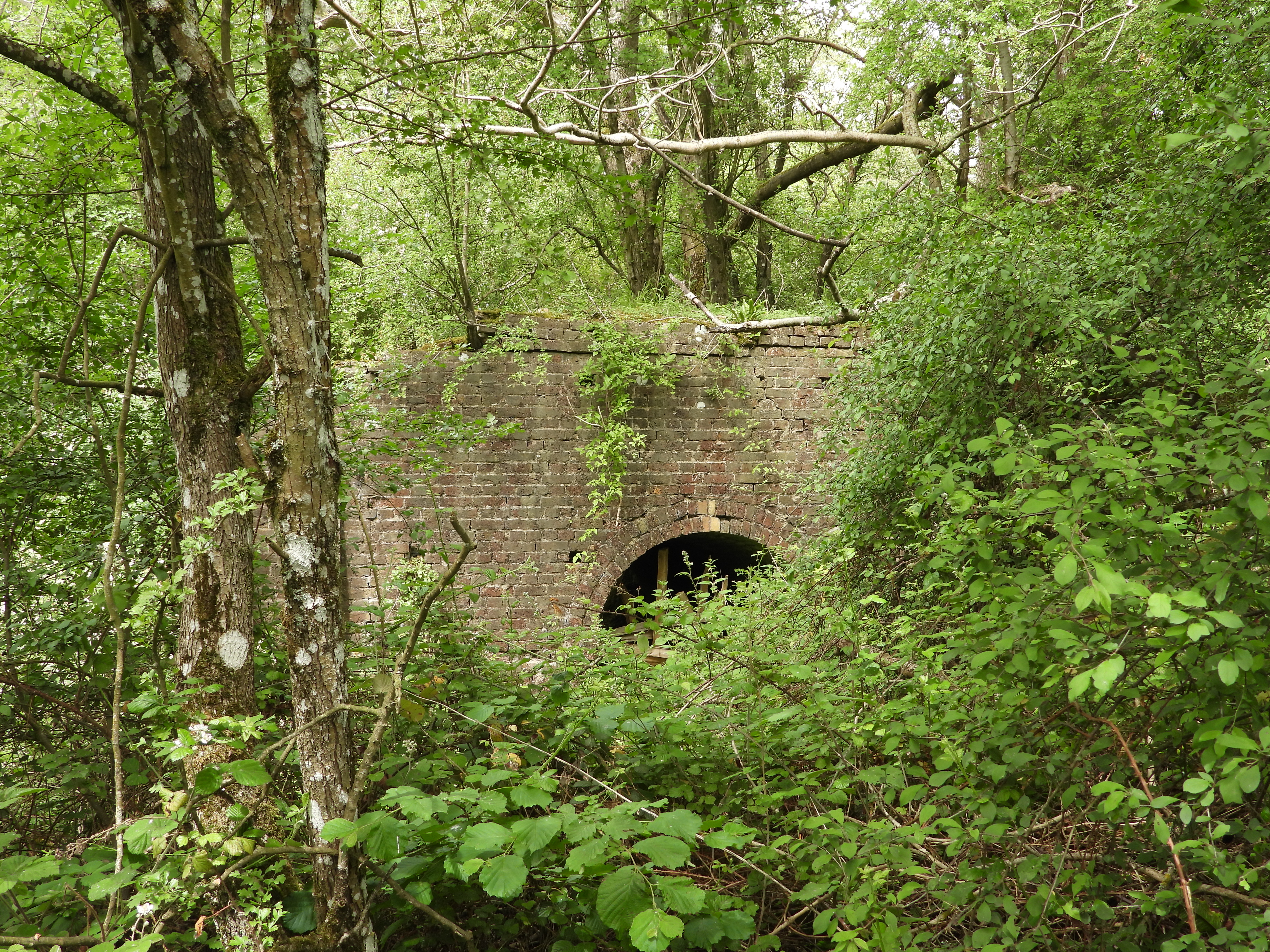
My membership of the local wildlife group is lapsed but they kindly allowed me to join them yesterday on a visit to a disused lime quarry, now a chalk grassland nature reserve. I will be renewing my membership – it was a glorious and rewarding afternoon.
The nearby cottages are the Lime Kiln Cottages and we parked in what was once the station yard. The railway is long gone but we walked to the site along what we assumed was once the railway cutting. Before that a padlocked gate was a major obstacle. We all bemoaned the loss of our abilities to execute what I used to know as a five-bar gate vault and it took us quite a while and no little effort to surmount it, not helped by the placement of wire fencing on the bottom third of the gate designed to make getting a toehold impossible. One of us advised doing it as near to the hinges as possible as a courtesy since that puts the least strain on the rest of the gate, something which had never occurred to me.
We were all impressed by this handsome and imposing Scottish Thistle.

Then the delapidated building at the head of this post which we thought may once have been a kiln.
In terms of birds we saw a Kestrel and House Martins and heard Chiffchaffs, Goldcrests and Yellowhammers. Now that I know the Yellowhammer call I don’t think I will forget it. The mnemonic is “a little bit of bread and no cheese”.
The leader of the group, the only one I had not met before, was a lovely man who shared his vast knowledge generously. He could identify pretty much everything with Latin names thrown in and his passion for wildlife has been his work and pleasure since he was a student.
As we had hoped there were a fair few butterfly species. Lots of Ringlets:

This Small Skipper:

Small Blues were also around and we spotted Cinnabar Moths and this spiky Peacock Caterpillar.

Small Blues are completely dependent on Kidney Vetch to the extent that the females lay their eggs directly inside the flowers upon which and only which the larvae feed. The plant is also an important source of nectar for the adults. Small Blues are indeed small and rather pale – nothing like the bright colour of the Common or Holly Blues. Extremely confusingly, Collins Butterfly Guide does not list the Small Blue at all instead calling it the Little Blue which AI says is a completely different species. Nevertheless the Small Blue and the Collins Little Blue are both Cupido minimus.
One other butterfly I saw was a Gatekeeper. I described it and it was suggested that it was a Meadow Brown but I am reasonably sure I was correct.
There was also a White Plumed Moth, a beautiful and elegant creature, purely bright white and bearing feathery plumes.
One interesting fungus:

There was a great variety of plant life, including Lady’s Bedstraw and Bird’s-foot-trefoil which I have illustrated in this blog before, also Milkwort and Sainfoin. Coincidentally, I only learnt about Sainfoin, a fodder crop, last month.
This is Yellow-wort, Blackstonia perfoliata, named in honour, Gemini tells me, of “John Blackstone (1712–1753), an 18th-century English apothecary, botanist, and botanical writer.”

The way the stem grows straight through the middle of the leaves is truly a curiosity. Perfoliata is Latin for ‘through the leaves’.
We also saw a good number of Common Spotted-orchids.

And I always love a Dog Rose.


These flowers are on the same bush but do not all bloom at once. The paler example is a faded version of the pink one.
WIid thyme. In the second picture it’s possible to make out a Yellow Meadow Ant mound.


Finally, I found this Hoary Plantain very appealing.

Our guide was disappointed not to have found Fly Orchids which he has seen at the site before. By one of those coincidences which makes one wonder if the algorithms really can read minds, this came up on my feed this morning, before I had started writing this post or doing any research into what we had or hadn’t seen.
Country diary: A tiny orchid with mighty powers of deception
A smattering of wildlife and other animal news. Happily, Pine Marten sightings seem to be on the rise including locally and now in West Sussex. Meanwhile the entirety of page 3 of yesterday’s Times newspaper is given over to two stories which I suppose are intended to be uplifting. As so often with mainstream media, I found both depressing. One records an upsurge of interest in the cruel sport of polo, the other the hatching of Pelican chicks in St James’s Park, where they really shouldn’t be. It seems the birds first arrived in 1664 as a gift from the Russian ambassador to Charles II. Of course they have their wings clipped.
Leave a Reply