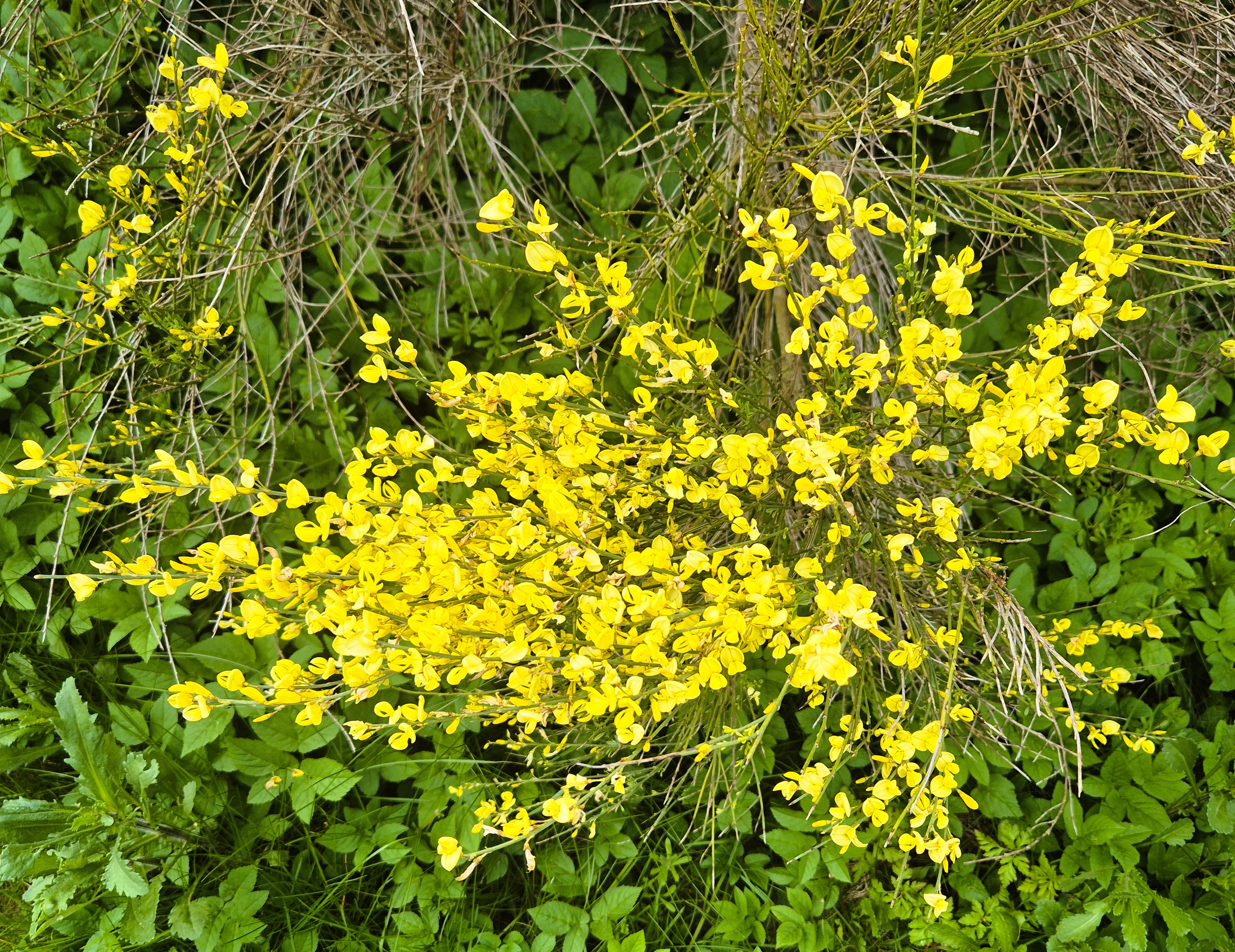
I’ve been seeing quite a number of tiny blue butterflies in the garden and around the village. They are most likely Holly Blues, also or previously known as Wood Blues, Azure Blues or Blue Speckt Butterflies with Black Tips. Only the females have black borders to their wings. They are apparently fairly common in the south of England. Meanwhile, the Broom in the garden, above, is in full, beautiful bloom.
I will shortly sow the wildflower seeds sent to me (for free) by 38 Degrees as part of their Seeds for Bees Campaign.
It is in so many ways a good time to bury bad news. There is little doubt anywhere I think that America is run by a deranged man who thinks he is the Messiah (The Life of Brian springs to mind) and the UK by a sort of mendacity robot. Nevertheless it seems worth mentioning Wild Justice’s comments on a report from The Guardian which reveals that Nature England “has quietly paused its SSSI designation pipeline” as though wildlife and nature were under insufficient attack. The result is that nationally important sites are unprotected and being developed. There are potential 22 sites on the waiting list, fourteen of them at high risk. One has already been lost, two have been on the list for more than ten years, ten for more than five. None are being added.
A Nightjar is on the cover of latest Birdwatch magazine, May 2026, Issue 407. I am lucky enough to have seen and heard several (not very easy to do) on an evening walk organised by our local wildlife group. I have already reported on the account of their recent success given at the British Trust for Ornithology conference.

Mark Avery discusses the long awaited The Land Use Framework for England which promises some small steps towards a partial respite from shooting for certain bird species. I don’t understand anyone who shoots birds but as he says, who the hell shoots Coots? He also asks why there are no bag limits set and no requirements to report numbers killed. The British Association for Shooting and Condemnation, sorry, I mean Conservation, has predictably asked supporters to reject all of the proposals, risibly suggesting that the industry would self-regulate. They want to add a number of species to the recreational shooting schedule, including Brent Goose, Great Cormorant, Egyptian Goose, Goosander, Great Black-backed Gull, European Herring Gull, Jack Snipe, Raven and Stock Dove. Unbelievable. And a very good reason for voting for the Green Party here or in Scotland which oppose bloodsports full stop.
There are plenty of the usual accounts of rarities with great photos and often wonderful names – the Andalusian Buttonquail for example.
Simon Breeze write thoughtfully about the potential drawbacks of AI birding, in particular the Merlin app (without which I would have missed a great deal over the last couple of years). He quotes Stephen Moss frequently and I tend to agree with him – the benefits outweigh the potential loss of traditional fieldcraft. But I take the point. Thanks to satnav I no longer seem to have a sense of direction.
Mark Constantine’s ‘The oscine revolution’ is fascinating, dealing with the evolution of birdsong and our understanding of it. ‘Oscine’ is a word completely new to me but birds either are or they aren’t. Songbirds have additional tiny muscles in their syrinxes and so are oscines. In Europe all passerines are oscines, non-passerines are non-oscines. Oscen is Latin for songbird. “There is always more to singing than we think.” I thought too of Maya Angelou’s autobiography, I Know Why the Caged Bird Sings.
A new study from the Netherlands reveals the effects of noise pollution on birds: Great Tits may sing at a higher frequency to make themselves heard for example and birds near airports will begin their chorus earlier. There are stress induced effects on their behaviours, physiology and reproduction too.
An advert in the magazine for CleySpy which sells optical products is worth a mention for the deliberately terrible pun of the kind I love. “Once … … Twice Shy”. In between is a photo of a Bittern, the UK’s loudest bird (with Wrens and Cetti’s Warblers giving them a run for their money). .

Leave a Reply