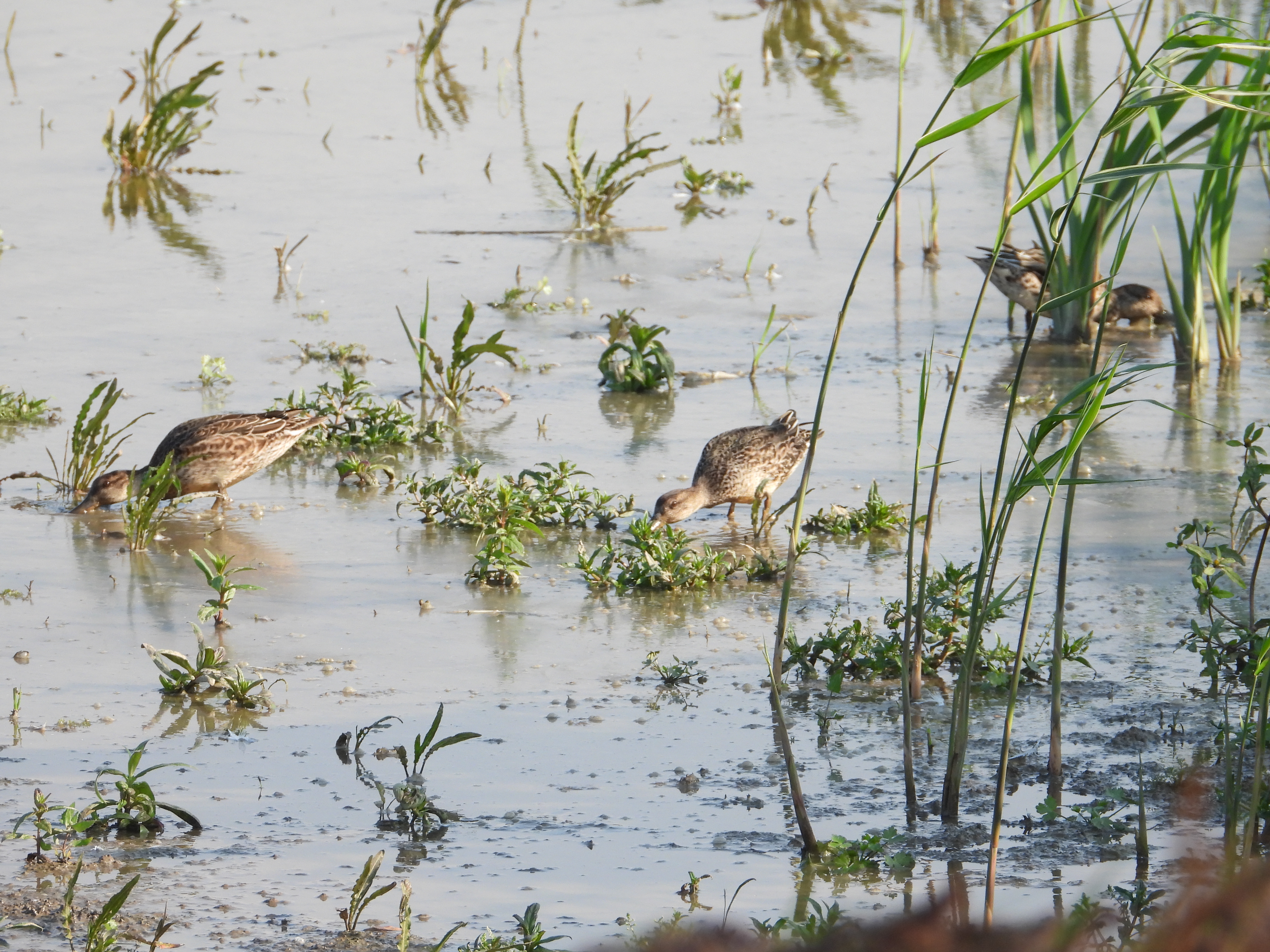
I have already posted the image above (Teal) in one of the Norfolk trip posts but thought it deserved a second outing. I love the colours.
E-mail news from Birdguides is in. Cattle Egret, seen in Norfolk, are as I suspected a relatively recent phenomenon here in terms of numbers and they are doing well. I have seen them abroad (especially in Jamaica) and had thought they were primarily confined to India, the Far East and the Southern Hemisphere. They are a little smaller than the Little Egret and have a bright yellow beak. They are found alongside livestock, benefitting from the insects and worms their hooves dig up.
The European Turtle Dove is in decline in spite of best efforts, so it was to good to read that the ‘bag limit’ in Morocco has been reduced. But, reading on, this turns out to be from 50 to 40, per hunter, per day. I have been unable to establish how many if any end up on the plate, but huge numbers are hunted purely for ‘sport’. Who would wish to murder such a beautiful bird? It is completely beyond me. A website called Hunting Pleasure offers “a very beautiful bird with more difficult shooting than it seems and which will surprise you!” [sic] In 2019 numbers shot were estimated at between two and four million. As one commentator suggests, how about reducing it to none?
Hearteningly, the RSPB has just opened a new wetlands site in Norfolk, Loughlin’s Marsh.
Meanwhile, the ivy in the garden has flowered and is alive with bees and other insects, who are also availing themselves of some wild flower mixes I sowed in the spring. I had been a bit disappointed with them, but actually they have provided colour ever since and so some thought has gone into the mix. Ivy is a much maligned species – it does not ‘strangle’ trees and although I have had to remove some from brickwork, which it does damage, it is a hugely good source of nourishment for insects, birds, bats and other small mammals, especially when there is not much else about.
Leave a Reply