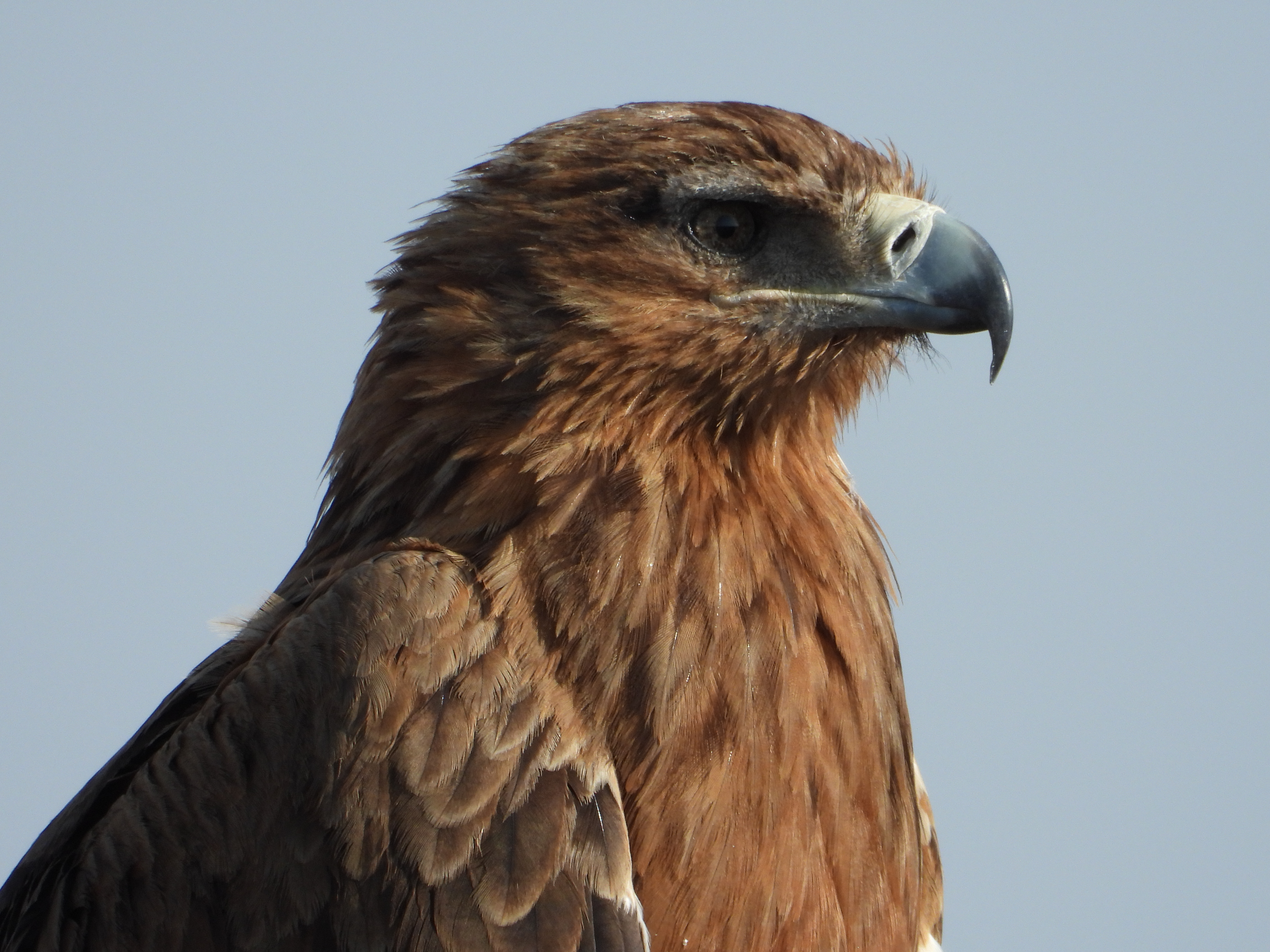
I include bird photographs from my trip to Kenya. I have tried very hard but cannot be 100% sure of all of the species but these are my best guesses. Immediately above and below are images of African Tawny Eagles, I think.


There has been a lot of news from Birdwatch and BirdGuides, especially of rare sightings including the first recorded appearance in Britain or Ireland of a Yellow-Crowned Night Heron in County Mayo. An Indigo Bunting caused much excitement in County Durham, as did a Booted Eagle in Cornwall.

I think I remember being told at the time that this was a Martial Eagle, but he or she does not have spots on its chest, so I now wonder if it isn’t a Black-chested Snake Eagle.
The serial bird egg thief David Lingham has avoided jail this time around although caught with over 3,000 eggs, some of them hidden behind a bath panel, on the grounds of mental health issues, an addiction he claims he cannot control.

Most likely an African Scops Owl.
There are reports of more “mysterious” deaths of birds of prey, including an Osprey (possibly he or she died from natural causes) and a Tawny Owl which was shot with a rifle in Northamptonshire.

Brown-hooded Kingfisher.
A European Robin made its way to the Brazilian Amazon, mostly likely by hitching a ride on a cruise ship and a study of egg shell spotting or maculation suggests that that diversity may have developed to aid identification by the adults whilst unmarked white eggs may be easier to see in low-light conditions such as those experienced by cavity-nesting birds.

Spotted Thick-knee
One rather poignant article in the printed magazine especially interested me. It concerns attempts to conserve the European Turtle Dove which has suffered one of the most severe declines of all in recent decades. In Britain for every hundred here in the 1960s there is now just one. Some relief has come from seasonal hunting bans in continental Europe, but the picture remains extremely grim. The Turtle Dove Trust is a charity, dependent entirely on donations, which runs a captive breeding and release programme in East Anglia, rearing and releasing hundreds each year. There is a controversial aspect to this in that there is a statement on the Trust’s website expressing the intention of creating a population “able to survive year-round in Britain”. They are migratory birds, so this was more of a fond, idealistic but misguided hope of the founder’s, Bill Makins, with a view to protecting the birds from the guns of Southern Europe and the idea is not being pursued. Sadly the RSPB has turned down invitations to visit the release sites and Natural England will not engage either, other than to criticise. The aim now is to track and monitor the released birds to see properly whether the reintroduction scheme is working, i.e. whether they migrate and return to breed. Without that proof, it is understandable that the Trust will struggle with funding but as Josh Jones, the author of the piece suggests, the Turtle Doves may be running out of time.

Three-banded Sandplover
Leave a Reply