The Phoenix Trail
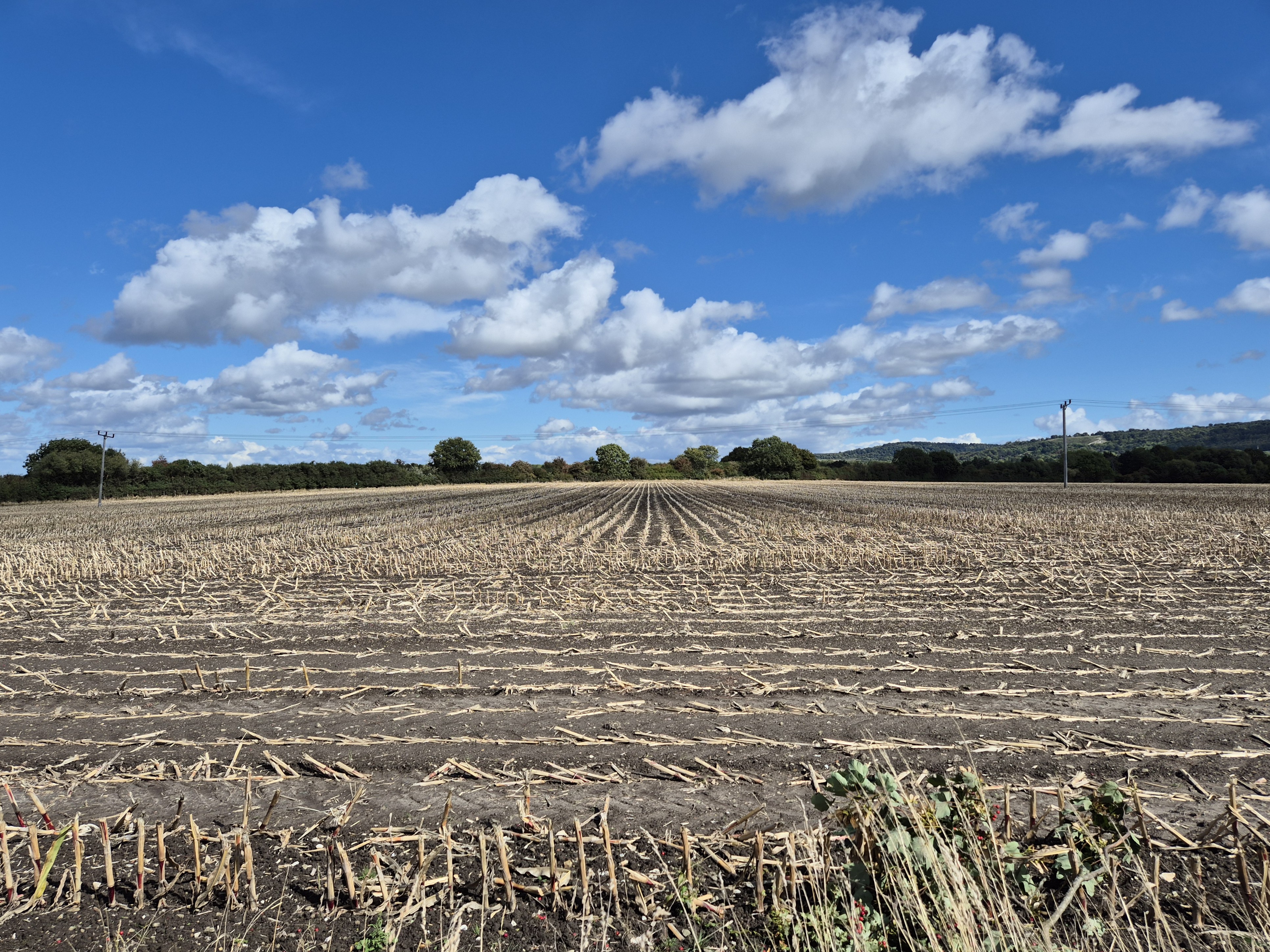
I parked just outside Princes Risborough and easily picked up the Phoenix Trail which runs on variably surfaced paths to Thame, about a fifteen mile round trip. It was very peaceful and runs through wooded sections and arable fields, with great views of the Chiltern Hills.
It’s also a sculpture trail with some thirty works by Angus Ross and six furniture students from Rycotewood College in Thame (it was pretty difficult to find this information) partly inspired by the trail’s crossing the Chinnor and Princes Risborough railway and the Wycombe railway track bed’s forming part of the trail itself. The sculptures are mostly made from locally sourced green oak and some also serve as somewhere to sit.
Having been dedicated to cycling the Kennet & Avon Canal towpath for so long, it was a pleasant change not to have to worry about the narrowness ot the path and the strong possibility of falling off and even into the water – this was much more relaxing. Other people’s meals can be as dull as other people’s dreams, but I will mention lunch at The Black Horse in Thame and in particular their crab mayonnaise with perfect chips and a pistachio soufflé with chocolate ice cream. The staff could not have been friendlier. I was alone in braving the threat of rain and sat outside but there was no hint of concern that I might try to leave without paying and they didn’t even mind when I knocked a chair over with the bike on my way out, happily saying that they would pick it up for me.

There’s something I quite like about electricity pylons. There’s a wealth of information here Everything you ever wanted to know about electricity pylons | National Grid to satisfy my inner geek. The A-frame structure hasn’t changed much since the original design competition run by the Central Electricity Board in 1927, won by the Millkien Brothers, an American engineering company. There are 22,000 of them in England and Wales alone. Some are being replaced by tunnels in areas of natural beauty, chosen by such groups as CPRE and the Ramblers’ Association. Rudyard Kipling and John Maynard Keynes wrote to The Times complaining of the permanent disfigurement of the landscape which I find understandable, but the Pylon Poets, a 1930s group which included W. H. Auden, Stephen Spender, Cecil Day-Lewis and Louis MacNeice, found them inspirational. There’s a Pylon Appreciation Society on Facebook and a Pylon of the Month website which I am unable to access so perhaps it is defunct.


The Chinnor and Princes Risborough railway – steam and vintage diesel trains still run along it at certain times of year.
The first sculpture and its variants, reminiscent of railway signals:


This series, less obviously, represents phases of the moon – another piece of information which took some digging.


The trail is very well signposted, which didn’t stop me making three wrong turns on my way back from Thame, but it seems an omission that there’s no information about the sculptures.

This is presumably based on a platform shelter.

Not sure about this one.


Neither am I sure what these represent (hares, possibly?) but they are rather impressive.

This signpost seems to have an American Indian style.

My favourite, which made me think of the tusks of an elephant.


I am afraid I just didn’t really ‘get’ these last two.

Rosebay Willowherb, just about still in flower.

I was pleased to see that the trail has a wildlife volunteers group. Small Whites were everywhere in profusion.


Bledlow Station. Station Master Percy Smith served for 44 years (or 32 depending on your source), handing over to his son. As well as the passenger services, freight trains benefitted local businesses such as Bledlow Lower Mill, which produced paper made from linen and cotton rag, the station facilitating the transport of the raw materials and the finished products. The Wood Mill in Longwick sent watercress, willow poles and other agricultural products to London.
The station was closed in 1967 under the Beeching Act but the line remained open until 1991 serving the Oil Storage Depot in Thame, which I assume is what this is.

In 1968 the station was converted to a private residence and is still owned by descendants of Percy Smith.
This is the picture perfect church of St Michael and All Angels at Horsenden:

The door was locked unfortunately. Horsenden Manor is apparently owned and occupied by Jamiroquai.
A double rainbow


And a Hollyhock.

Sparrowhawk

From: Meyer (Henry Leonard). Illustrations of British Birds, c.1835-1844.
I only caught a glimpse but one of these amazing raptors swooped low by the bird feeders, missed I think, landed for a moment on the summerhouse door and then flew off. I only saw the underside really which looked browner than I would have expected, perhaps suggesting a juvenile. Extraordinarily she (?) has just appeared again, fleetingly, as I write. She definitely took a Great Tit this time. I saw her on a garden chair with the poor songbird in her talons. I was watching intently but did not see her take off. They move like lightning. The noises the victim made were exactly what I heard before so perhaps the earlier attempt was in fact also successful. I say Sparrowhawk not with certainty but because I can’t think she could have been anything else and I have heard from others that they are present in the area.
I included this footnote in Animal Wild: “I have heard people say that they hate Sparrowhawks for predating songbirds in their gardens, “our birds” as someone put it. But Sparrowhawks have to eat too and their presence is actually a good sign of a healthy and diverse avian population.” Nevertheless I hope she doesn’t take all the smaller birds.
Bird murder raffle
This is from a report by Protect the Wild and is one of those that makes my blood temperature rise to near boiling point. BASC is the British Association of Shooting and Conservation, an oxymoronic name if ever there was one. It began as a wildfowling group in 1908, to “Address the growing need to defend wildfowling, largely against the growing enthusiasm of extremists seeking the total protection of wild birds.” It merged with the UK’s Gamekeepers’ Association in 1981. Recently it has fought the banning of lead shot and snares, limits on shooting Woodcock and provided ‘fact’ sheets to the Tory MPs who participated in the pitiful grouse shooting debate in parliament.
Not only is BASC sickeningly raffling two days’ worth of shooting, the killing will take place on Lindisfarne National Nature Reserve. You couldn’t make it up. This is from the promotion of their raffle: “Lindisfarne is renowned for its remarkable birdlife and breathtaking landscapes. Recent counts recorded up to 13,000 pink-footed geese and 23,000 wigeon at the site. You’ll have the opportunity to enjoy the challenge of the sport at its finest, against the backdrop of stunning sunrises and sunsets.” The reserve, wetland of international significance, was established specifically to help wintering wildfowl and wading birds. How horrible it would be to visit and by chance witness the carnage. How is this even legal? It’s permitted by the as ever not fit for purpose Natural England.
Leave a Reply